
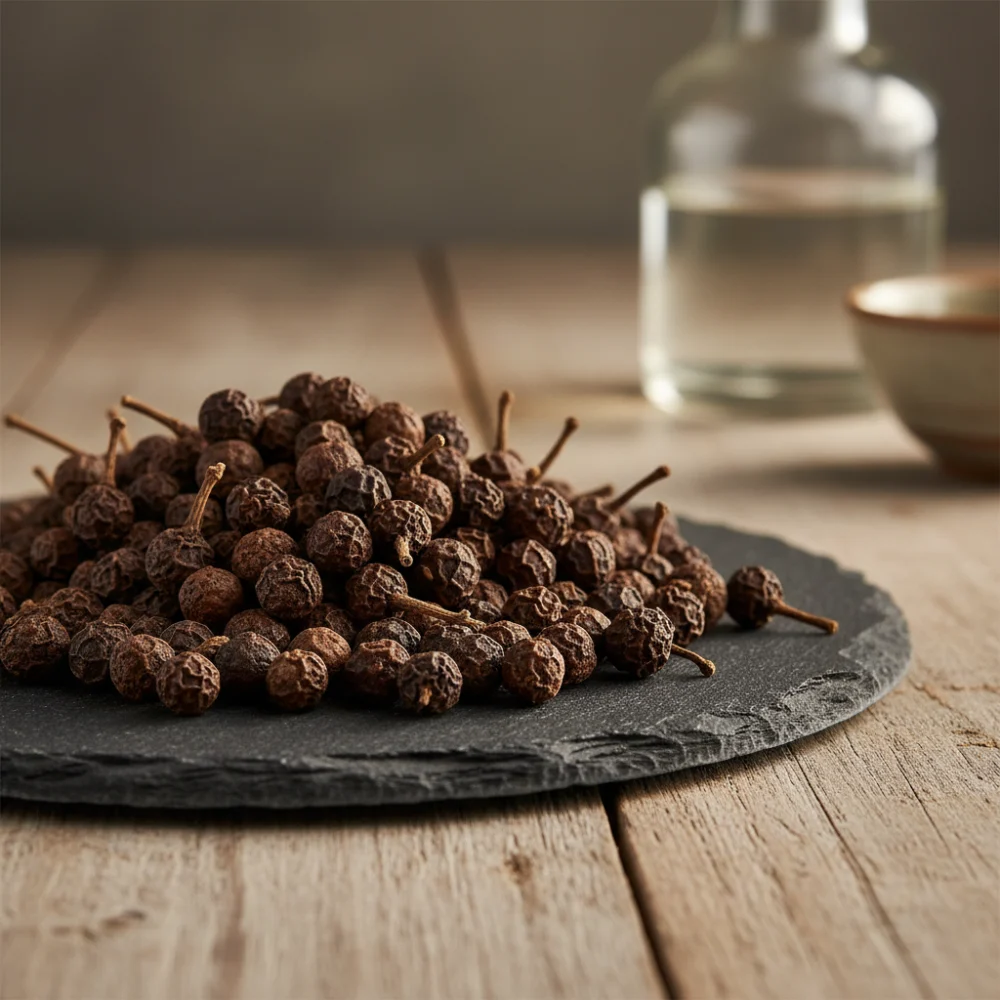
Cubeb pepper, scientifically referred to as Piper cubeba, is a member of the Piperaceae family and is native to the Indonesian islands of Java and Sumatra. It is most famously known as the tailed peppercorn because each dried berry retains a small, stalk-like attachment that resembles a tail. While it looks similar to black pepper, its chemical composition and aromatic qualities are significantly different, offering a bridge between the heat of black pepper and the warmth of spices like cloves and allspice.
Essential Requirements for Working with Cubeb Pepper
To successfully integrate this spice into your culinary repertoire, you should have the following items ready:
- Whole Cubeb Berries: Look for berries that are dark, wrinkled, and possess their signature tails.
- Manual Spice Grinder: A ceramic or steel burr grinder is preferred to handle the slightly larger size of the berries.
- Mortar and Pestle: Ideal for cracking the berries coarsely for infusions or dry rubs.
- Airtight Storage: A cool, dark place to store the peppercorns to preserve their volatile oils.
Step 1: Identifying High-Quality Cubeb Berries
The first step in using cubeb pepper is ensuring you have the authentic product. Examine the peppercorns for the characteristic tail, which is actually the pedicel of the fruit. High-quality cubeb should be dark brown to black and have a strong, pungent aroma even before being crushed. If you smell notes of eucalyptus or camphor, the spice is fresh. Avoid berries that appear dusty or lack the tail, as these may be inferior substitutes or aged beyond their prime.
Step 2: Understanding the Aromatic Profile
Before cooking, it is important to analyze the flavor. Cubeb pepper is not just spicy; it is deeply aromatic. It contains high levels of cubebene and cineole, giving it a cooling, menthol-like finish. The initial taste is peppery and slightly bitter, followed by woody notes of cedar and a hint of citrus. Because of this complexity, it is often used in gin production and traditional North African spice blends to provide a layered sensory experience that standard black pepper cannot achieve.
Step 3: Preparing the Spice for Cooking
For the best results, always grind cubeb pepper fresh. The essential oils dissipate quickly once the outer husk is broken. If you are using it in a liquid-based dish like a soup or a gin-based infusion, you can use the berries whole or lightly cracked to allow the flavors to seep out slowly. For dry applications, such as a crust for roasted meats, a medium-fine grind is best. Be cautious with the quantity; because of its bitter undertones, a little cubeb goes a long way compared to common peppercorns.
Step 4: Applying Cubeb to Savory and Sweet Dishes
Incorporate cubeb pepper into your recipes by pairing it with ingredients that complement its resinous notes. It works exceptionally well with gamey meats like lamb or venison, where its pine-like aroma helps balance the richness of the fat. In the realm of sweets, cubeb is a secret ingredient for gingerbread or dark chocolate desserts, adding a sophisticated heat that lingers on the palate. It is also a key component in authentic Ras el Hanout, providing the blend with its signature exotic depth.
Conclusion on the Versatile Tailed Peppercorn
The cubeb pepper is a versatile and historically significant spice that offers much more than simple heat. By following these steps to identify, understand, and prepare the tailed peppercorn, you can unlock a world of flavor that spans from ancient medicinal teas to modern fine dining. Whether you are a craft distiller or a home cook, the cubeb pepper remains an essential tool for creating complex, aromatic profiles that stand out in any dish.

Related Posts