Vanilla beans are the cured, unripened fruit pods of the Vanilla orchid, primarily the Vanilla planifolia species. As one of the most labor-intensive crops in the world, each flower must be hand-pollinated and the beans must undergo a months-long process of sweating and drying to develop their signature aroma. Understanding the nuances of these beans is essential for achieving professional-grade results in baking and confectionery.
Step 1: Distinguish Between Grade A and Grade B Beans
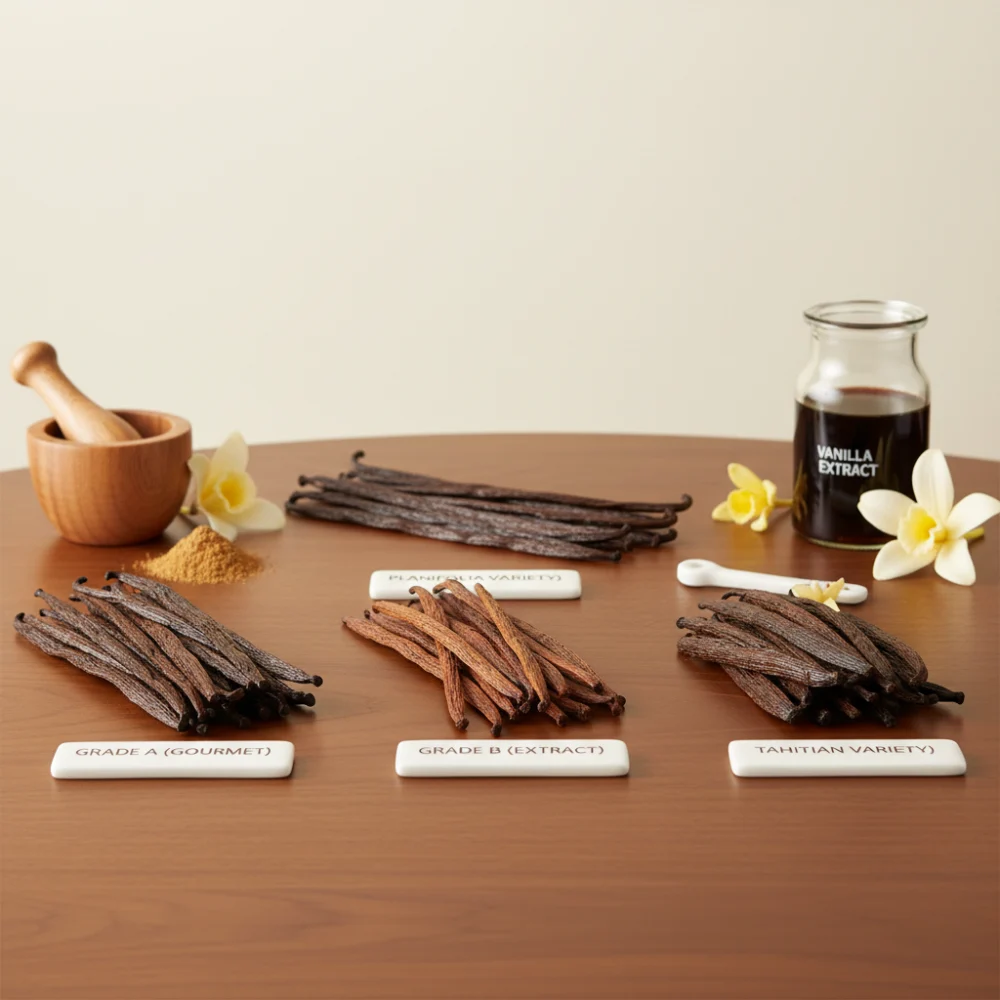
The first step in selecting the right vanilla is understanding the grading system, which is primarily based on moisture content and appearance. Grade A vanilla beans, also called gourmet or prime beans, are dark, oily, and plump. They typically have a moisture content of 30 percent or higher, making them flexible enough to bend without breaking. These are best used for recipes where you scrape the seeds directly into the dish. Grade B vanilla beans, known as extract beans, have a moisture content of about 20 to 25 percent. They are drier, thinner, and often brittle, which makes them the ideal choice for making homemade vanilla extract or infusions where the bean is soaked in liquid.
Step 2: Recognize Regional Flavor Profiles
The environment in which vanilla is grown significantly impacts its flavor. Here are the most common varieties you will encounter:
- Madagascar Bourbon: This is the gold standard for vanilla, offering a rich, creamy, and sweet flavor profile that is highly versatile.
- Tahitian: These beans are often thicker and contain less vanillin but more floral and fruity notes, often described as having hints of cherry or anise.
- Mexican: Known for a deeper, spicier, and woodier profile, Mexican vanilla is excellent for pairing with chocolate and warm spices.
- Ugandan: These beans are bold and earthy with a high vanillin content, often smelling like milk chocolate or raisins.
Step 3: Choose the Right Bean for Your Culinary Application
To maximize your investment, you must match the bean to the method. If you are making a vanilla bean paste, custard, or panna cotta, use a Grade A Madagascar bean to ensure the seeds disperse evenly and the flavor is classic. If you are infusing a bottle of vodka or bourbon to create your own extract, Grade B beans are more economical and effective, as the lower moisture content allows the alcohol to penetrate the bean more efficiently to extract the aromatic oils.
Conclusion
Whether you are a professional pastry chef or a home baker, knowing the difference between vanilla grades and regional varieties allows you to control the depth and character of your flavors. By selecting Grade A for texture-sensitive dishes and Grade B for long-term infusions, and experimenting with the floral notes of Tahiti or the creaminess of Madagascar, you can elevate any recipe from ordinary to extraordinary. Always remember to store your beans in an airtight container away from direct sunlight to maintain their potency.

Related Posts