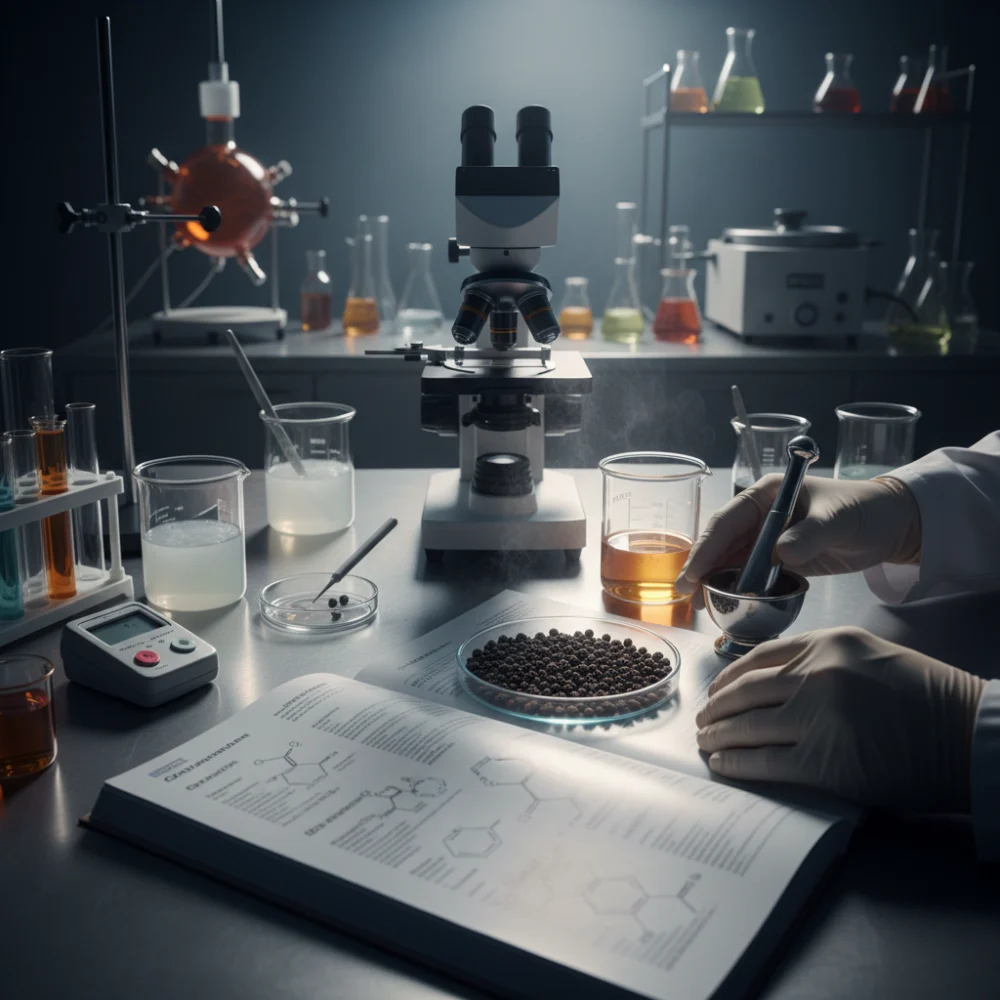
Black peppercorns are the most widely traded spice in the world, valued for their unique ability to add both heat and depth to a variety of dishes. Unlike the capsaicin-driven heat of chili peppers, the pungency of black pepper comes from a chemical compound called piperine. Understanding how this compound works and how it is affected by processing and storage is essential for any culinary professional or enthusiast.
Requirements for Evaluation
- High-quality whole black peppercorns (various origins like Tellicherry or Malabar)
- A ceramic or stone mortar and pestle
- A temperature-controlled storage environment
- Basic knowledge of the Scoville scale versus piperine concentration
Step 1: Identify the Source of Heat
The primary source of pungency in black peppercorns is piperine. This alkaloid is found in both the outer fruit (pericarp) and the inner seed. Unlike chili peppers, which affect the pain receptors on the tongue, piperine stimulates the heat-sensing nerves through a different mechanism, providing a more localized and immediate bite. To understand the intensity, one must look at the piperine content, which typically ranges from 5% to 9% in high-quality peppercorns.
Step 2: Examine the Origin and Harvest
Terroir plays a significant role in the pungency of the spice. For instance, Tellicherry peppercorns are allowed to ripen longer on the vine, resulting in larger berries with a more complex, slightly less aggressive heat compared to standard Malabar pepper. When selecting peppercorns, check the harvest date and the region, as these factors dictate the concentration of essential oils and alkaloids.
Step 3: Evaluate Freshness Through Grinding
To truly gauge the pungency, you must crack the peppercorn. Using a mortar and pestle is superior to a pre-ground shaker because it releases the volatile oils immediately. Once the outer shell is broken, the piperine is exposed to the air. If the aroma is sharp and causes a slight tingling in the nostrils, the pungency levels are high. Pre-ground pepper loses its bite quickly as the piperine degrades and the oils evaporate.
Step 4: Test the Heat Profile in Cooking
Apply the pepper to a neutral base, like a simple broth or a piece of seared protein, to observe how the heat develops. Piperine is relatively heat-stable, meaning the pungency will persist through the cooking process. However, the delicate floral and woody notes (provided by terpenes) will dissipate. To maintain maximum pungency, add freshly cracked pepper toward the end of the cooking process.
Conclusion
Mastering the use of black peppercorns requires more than just a grinder; it requires an appreciation for the chemistry of piperine and the impact of freshness. By selecting high-quality whole berries and grinding them just before use, you ensure that the signature pungency remains the star of your culinary creations.

Related Posts