The Golden Spice Mystery
Saffron is often recognized for its ability to turn a dish into a vibrant shade of yellow-orange. However, limiting its role to a simple food coloring agent ignores the complex chemistry and sensory depth it provides. Derived from the Crocus sativus flower, this spice is the result of labor-intensive harvesting, making it the most expensive spice by weight. Understanding how to use it properly unlocks a world of earthy, floral, and honey-like notes that elevate a meal from ordinary to extraordinary.
What You Will Need
- High-quality saffron threads (look for deep red filaments)
- A mortar and pestle or a spice grinder
- Warm liquid (water, milk, or broth)
- A small glass bowl for steeping
- Patience for the infusion process
Step 1: Assessing Quality and Purity
Before you begin, it is crucial to ensure you have authentic saffron. High-quality saffron consists of fine, dry threads that are deep crimson with slightly orange tips. Avoid powdered saffron, as it is frequently adulterated with turmeric or paprika. To test purity, place a thread in warm water; real saffron will slowly turn the water yellow while the thread remains red, whereas fake saffron will bleed color immediately and the thread will lose its pigment.
Step 2: Grinding for Maximum Surface Area
To release the full spectrum of flavor and aroma, you should grind the threads. Using a mortar and pestle, crush the saffron into a fine powder. If the threads are a bit damp, adding a pinch of sugar or salt can act as an abrasive to help achieve a finer consistency. This step ensures that the chemical compounds like crocin (color), picrocrocin (flavor), and safranal (aroma) are fully accessible.
Step 3: The Critical Steeping Process
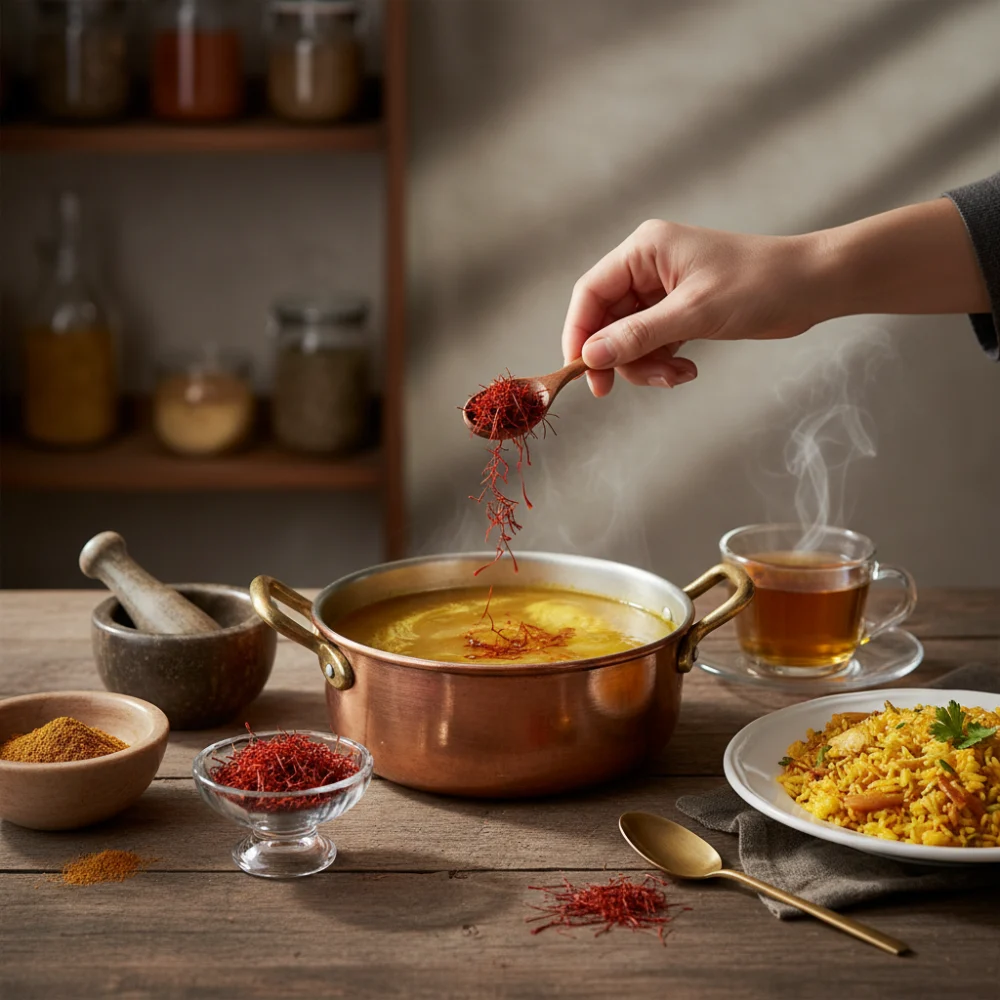
Never toss dry saffron threads directly into a boiling pot. To maximize the aromatic profile, steep the ground saffron in a small amount of warm liquid for at least 15 to 20 minutes. This process, often called blooming, allows the essential oils to emulsify with the liquid. The resulting infusion will be a concentrated essence that distributes evenly throughout your dish, providing a consistent flavor profile.
Step 4: Timing the Addition
Saffron is sensitive to heat. Adding it too early in a long cooking process can cause the delicate volatile oils to evaporate, leaving you with color but no taste. For best results, add your saffron infusion toward the end of the cooking process or during the simmering stage. This ensures that the subtle metallic and honey-like undertones remain intact when the dish is served.
Conclusion: Beyond the Visual Appeal
While the visual impact of saffron is undeniable, its true value lies in its ability to harmonize flavors and provide a lingering, complex aftertaste. By following the proper steps of selection, grinding, and steeping, you ensure that your culinary endeavors benefit from the full medicinal and sensory properties of this ancient spice. Saffron is not just a dye; it is a sophisticated ingredient that defines the character of global cuisines.

Related Posts