
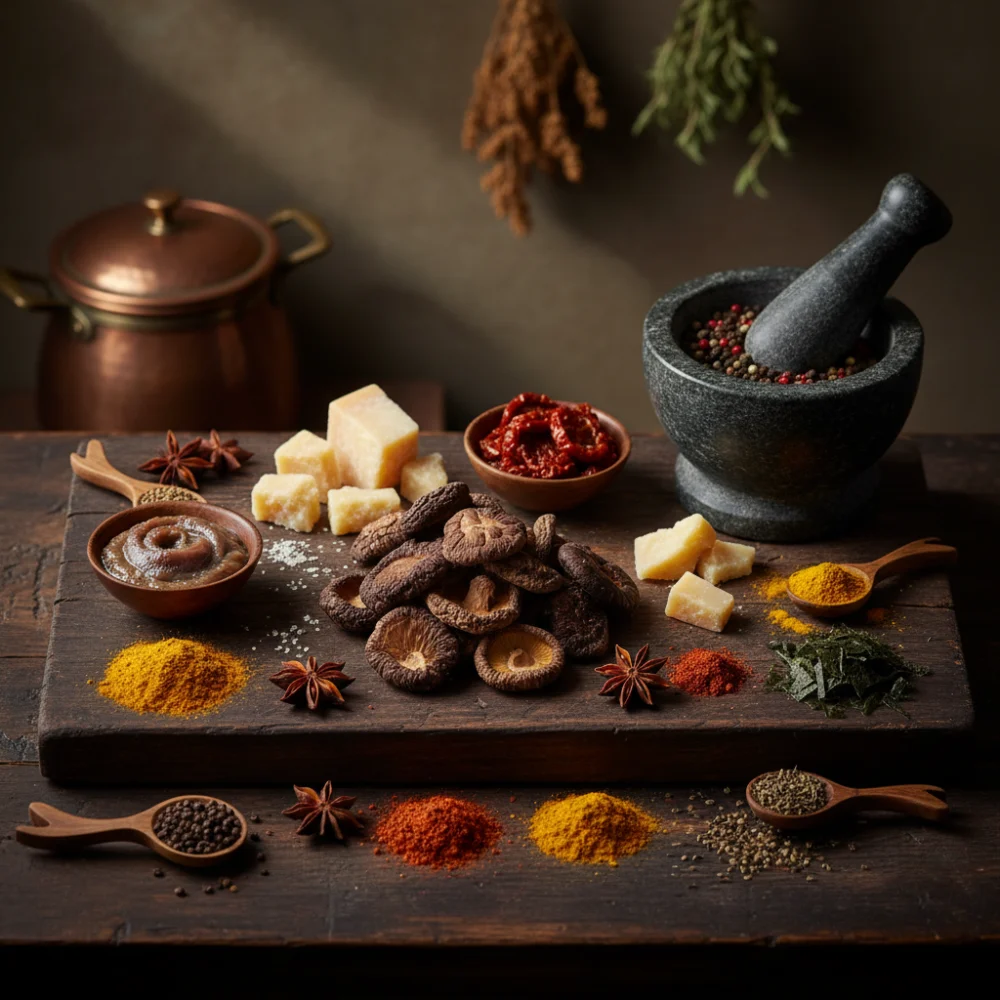
Umami, often referred to as the fifth taste, is a Japanese word meaning ‘pleasant savory taste.’ While we often associate it with meat, mushrooms, or soy sauce, many spices carry these deep, earthy notes that can transform a dish from flat to multi-dimensional. Understanding how to harness this flavor through spices is a game-changer for plant-based and meat-heavy cooking alike.
Requirements for Exploring Umami
To begin your journey into savory spice profiles, you will need the following:
- Whole spices: Cumin, coriander, and black peppercorns.
- Ground spices: Smoked paprika, garlic powder, and onion powder.
- Kitchen tools: A heavy-bottomed skillet and a spice grinder or mortar and pestle.
- Base ingredients: High-quality salt and a neutral cooking oil or butter.
Step 1: Identify Umami-Rich Spices
The first step is knowing which spices in your rack are ‘umami bombs.’ Cumin provides an earthy, musky depth that mimics the richness of meat. Smoked paprika offers a wood-fired savoriness, while dried garlic and onion powder contain concentrated sulfur compounds that trigger umami receptors on the tongue.
Step 2: Activate Flavors Through Toasting
Raw spices often have a sharp or bitter edge. To unlock the deep savory notes, you must toast them. Place whole seeds in a dry pan over medium heat for 2 to 3 minutes until fragrant. This process, known as the Maillard reaction, creates new flavor compounds that enhance the perception of umami.
Step 3: Bloom Your Spices in Fat
Most savory compounds in spices are fat-soluble. To maximize the impact, ‘bloom’ your ground spices by stirring them into hot oil or melted butter for 30 seconds before adding liquids or vegetables. This ensures the savory oils are evenly distributed, providing a consistent umami experience throughout the dish.
Step 4: Create Complex Spice Blends
Single spices are great, but blends are better for building umami. Try mixing ground mushrooms (a natural glutamate source) with black pepper and mustard powder. This combination creates a savory crust for proteins or a rich base for stews that tastes significantly more complex than the sum of its parts.
Conclusion
Mastering umami in your spice usage is about more than just adding salt; it is about building layers of savory satisfaction. By selecting the right ingredients, toasting them to perfection, and blooming them in fat, you can transform simple pantry staples into gourmet experiences.

Related Posts