
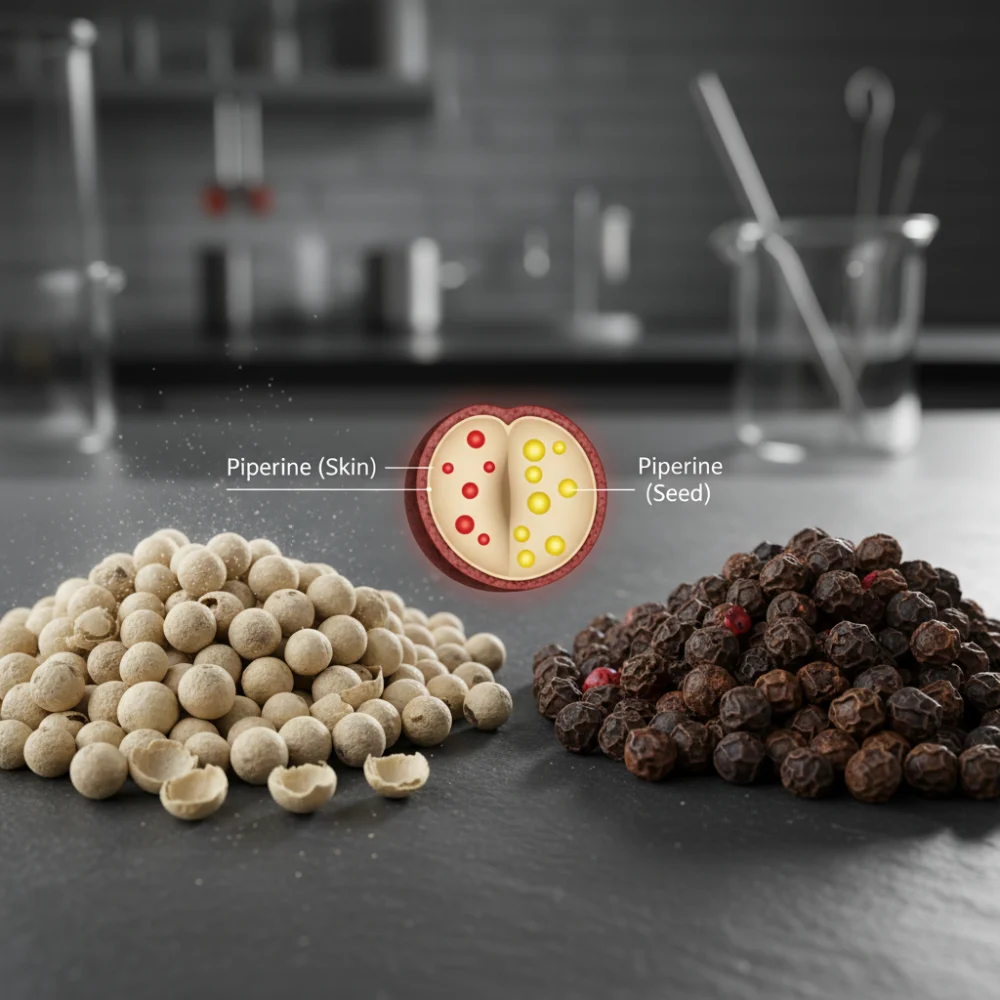
While both black and white peppercorns originate from the same plant, Piper nigrum, their flavor profiles and heat levels differ significantly due to how they are processed. White pepper is often described as having a more direct, sharp pungency, whereas black pepper is praised for its complex aroma and earthy notes. Understanding why white pepper packs a more concentrated punch requires looking at the anatomy of the peppercorn and the fermentation process it undergoes.
Step 1: Selecting Fully Ripened Berries
Unlike black pepper, which is harvested while the berries are still green and under-ripe, white pepper is typically produced from fully ripened red berries. These mature berries have a higher concentration of piperine, the alkaloid responsible for the characteristic heat of pepper. By allowing the fruit to ripen completely on the vine, the core seed develops a more intense chemical profile before processing begins.
Step 2: Executing the Retting Process
The defining characteristic of white pepper production is the removal of the outer fruit layer, known as the pericarp. This is achieved through a process called retting, where the berries are soaked in water for several days. This causes the outer skin to soften and decompose. While the outer layer contains many of the essential oils that provide black pepper’s floral and citrus notes, it actually dilutes the pure heat of the inner seed.
Step 3: Exposing the Concentrated Piperine
Once the softened outer skin is rubbed away, only the inner seed remains. This seed is almost entirely composed of piperine. In black pepper, the outer husk remains intact, providing a balance between aroma and heat. In white pepper, the removal of the husk strips away the aromatic distractions, leaving a pure concentration of heat. This is why the sensation of white pepper is often described as a sharp, biting sting on the back of the throat rather than a full-mouth flavor experience.
Step 4: Managing the Fermentation Factor
During the soaking process, a mild fermentation occurs. This fermentation contributes to the unique, somewhat musky or ‘funky’ aroma of white pepper. This chemical change can actually enhance the perception of pungency. Because the volatile oils that provide fragrance are gone, the human palate focuses more intensely on the irritant properties of the piperine, making the pepper feel significantly hotter in culinary applications.
Conclusion: The Result of Refinement
The increased pungency of white pepper is not a myth; it is a result of removing the aromatic ‘buffer’ of the outer fruit. By focusing on the mature seed and utilizing the retting process, producers create a spice that delivers a localized, intense heat. When cooking, use white pepper when you want to add sharpness without altering the color or the complex scent of your dish, but remember that a little goes a long way due to its concentrated nature.

Related Posts