Saffron, often referred to as ‘Red Gold,’ holds the title of the most expensive spice in the world by weight. For centuries, it has been prized for its vivid color, distinct aroma, and medicinal properties. However, for many consumers, the exorbitant price tag remains a mystery. Is it truly worth the cost, or is it simply a luxury commodity? To truly appreciate this spice, one must understand the journey it takes from the soil to the shelf.
This guide breaks down exactly what saffron is and provides a step-by-step explanation of the factors contributing to its high market value. By understanding the labor, scarcity, and processing involved, you will be better equipped to purchase and use this delicate spice effectively.
Requirements for Evaluating Saffron
Before diving into the complexities of saffron production, it is helpful to have a basic understanding of what to look for. If you are planning to purchase or evaluate saffron, keep the following in mind:
- Basic Botanical Knowledge: Understanding that saffron comes from the Crocus sativus flower.
- Visual Inspection Tools: A magnifying glass can help identify the texture of the threads.
- Sense of Smell: Authentic saffron has a distinct, hay-like, and metallic fragrance.
- Budget Awareness: Be prepared that high-quality saffron commands a premium price; cheap saffron is often fake or adulterated.
Step 1: Understanding the Botanical Source
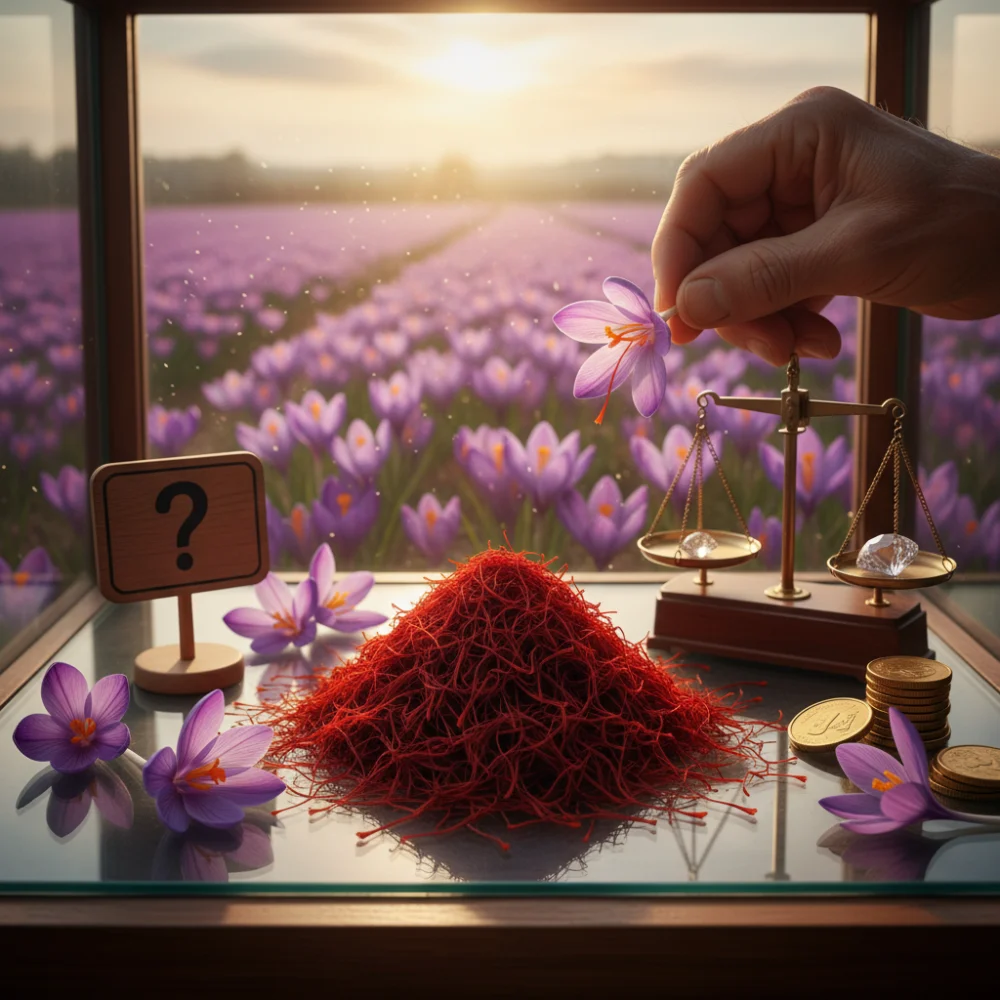
The first factor in the cost of saffron is its specific biological origin. Saffron is not a root or a leaf that grows in abundance; it consists of the dried stigmas of the Crocus sativus flower. Each flower produces only three tiny red stigmas (threads). These threads are the only part of the plant that contains the desired flavor and coloring agents. Unlike other spices where the entire fruit or seed is used, saffron utilizes a microscopic fraction of the plant, creating an immediate scarcity issue.
Step 2: The Labor-Intensive Harvesting Process
The primary reason saffron is so expensive lies in the harvesting method. There is no machinery capable of delicately plucking the stigmas without damaging the flower. As a result, every single thread of saffron is harvested by hand. This process is incredibly delicate and time-consuming. Furthermore, the flowers bloom for only a short period, usually a few weeks in autumn, and must be picked in the early morning before the sun wilt the petals. This creates a high-pressure, labor-heavy environment where thousands of workers are needed for a very short window of time.
Step 3: Calculating the Yield Ratios
To visualize the cost, one must look at the math of production. The yield of saffron is astonishingly low compared to the raw material required. It takes approximately 75,000 saffron flowers to produce just one pound (450 grams) of saffron spice. This means that to fill a small jar in your pantry, laborers had to hand-pick stigmas from hundreds or thousands of individual flowers. The sheer volume of land, water, and labor required to produce a kilogram of the final product drives the price up significantly.
Step 4: Processing and Drying
Once the flowers are picked, the work is not done. The stigmas must be separated from the flower immediately to preserve quality. This is another manual process where workers carefully detach the red threads from the yellow style. If the yellow part is left attached, it adds weight but no flavor, lowering the quality grade. The threads are then dried over heat or charcoal. This drying process reduces the weight of the fresh stigmas by roughly 80%, further concentrating the cost into a very light final product.
Step 5: Identifying Authentic Quality
Because saffron is so expensive, it is frequently counterfeited. Understanding why it is expensive helps you avoid scams. Authentic, high-grade saffron (often labeled as ‘Sargol’ or ‘Coupe’) consists of all-red threads with no yellow tips. Lower grades include the yellow style, which adds dead weight. Counterfeiters may use dyed corn silk or safflower petals. When buying, look for deep red threads with orange tips, and avoid powdered saffron unless purchased from a highly reputable source, as powders are easily adulterated with turmeric or paprika.
In conclusion, the high price of saffron is a direct reflection of the immense human effort and agricultural volume required to produce it. From the hand-picking of thousands of flowers to the delicate separation and drying processes, every gram of saffron represents hours of manual labor. While the cost may seem steep, its potent flavor and coloring ability mean that a very small amount goes a long way, making it a worthy investment for culinary enthusiasts.

Related Posts