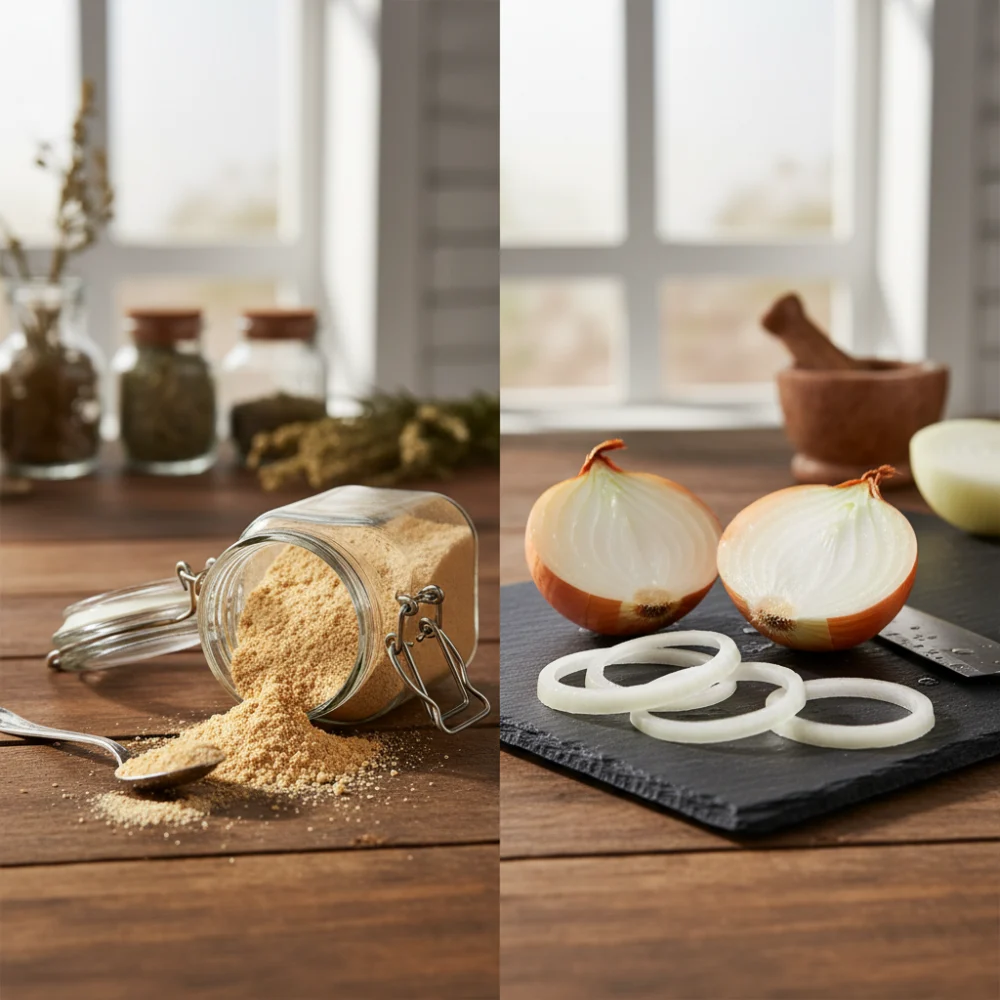
Onion powder and fresh onions are staples in kitchens worldwide, yet they offer vastly different sensory experiences. While one is a pungent, crunchy vegetable, the other is a concentrated, savory dust. Understanding these differences is key to mastering flavor balance in your cooking.
To compare these two ingredients effectively, you will need the following items: Fresh yellow or white onions, High-quality onion powder, A knife and cutting board, and A heat source for sautéing.
Step 1: Analyze the Dehydration Process
The primary reason for the flavor shift is the dehydration process. When onions are dried to make powder, the water content is removed. This process concentrates the sugars and sulfur compounds, but it also causes the loss of volatile oils that provide the sharp, bitey flavor characteristic of fresh onions. The heat used during drying can also induce a mild Maillard reaction, giving the powder a more toasted, mellow undertone compared to the raw vegetable.
Step 2: Consider Texture and Surface Area
Fresh onions provide structural integrity and moisture to a dish. When you bite into a piece of cooked onion, you get a burst of juice and a specific mouthfeel. Onion powder, conversely, dissolves into the liquid components of a recipe. Because the particles are so small, they distribute flavor evenly throughout the entire dish, providing a consistent background note rather than localized bursts of flavor and texture.
Step 3: Evaluate Enzymatic Reactions
When you cut a fresh onion, enzymes called alliinases are released, reacting with sulfur compounds to create the pungent gas that makes you cry. This chemical reaction is ongoing while the onion is raw and fresh. In onion powder, these enzymes are largely deactivated during the heating and drying process. This results in a flavor profile that lacks the sharp, acrid sting of raw onion and instead leans toward a savory, umami-rich sweetness that is more stable over time.
Step 4: Calculate Flavor Concentration
Because onion powder is highly concentrated, its flavor is much more intense per teaspoon than fresh onion. Generally, one tablespoon of dried onion powder is equivalent to one medium-sized fresh onion. Using too much powder can lead to a metallic or overly salty taste, whereas fresh onions add volume and sweetness as they caramelize over time. It is vital to adjust your ratios based on whether you want the onion to be a main component or a subtle seasoning.
Conclusion
In summary, onion powder and fresh onions are not direct substitutes but rather complementary tools. Use fresh onions when texture, moisture, and sharp aromatics are desired, such as in stir-fries or salsas. Opt for onion powder when you need a uniform savory base, such as in dry rubs, spice blends, or smooth sauces. By recognizing the chemical and physical changes that occur during processing, you can better control the outcome of your culinary creations.

Related Posts