
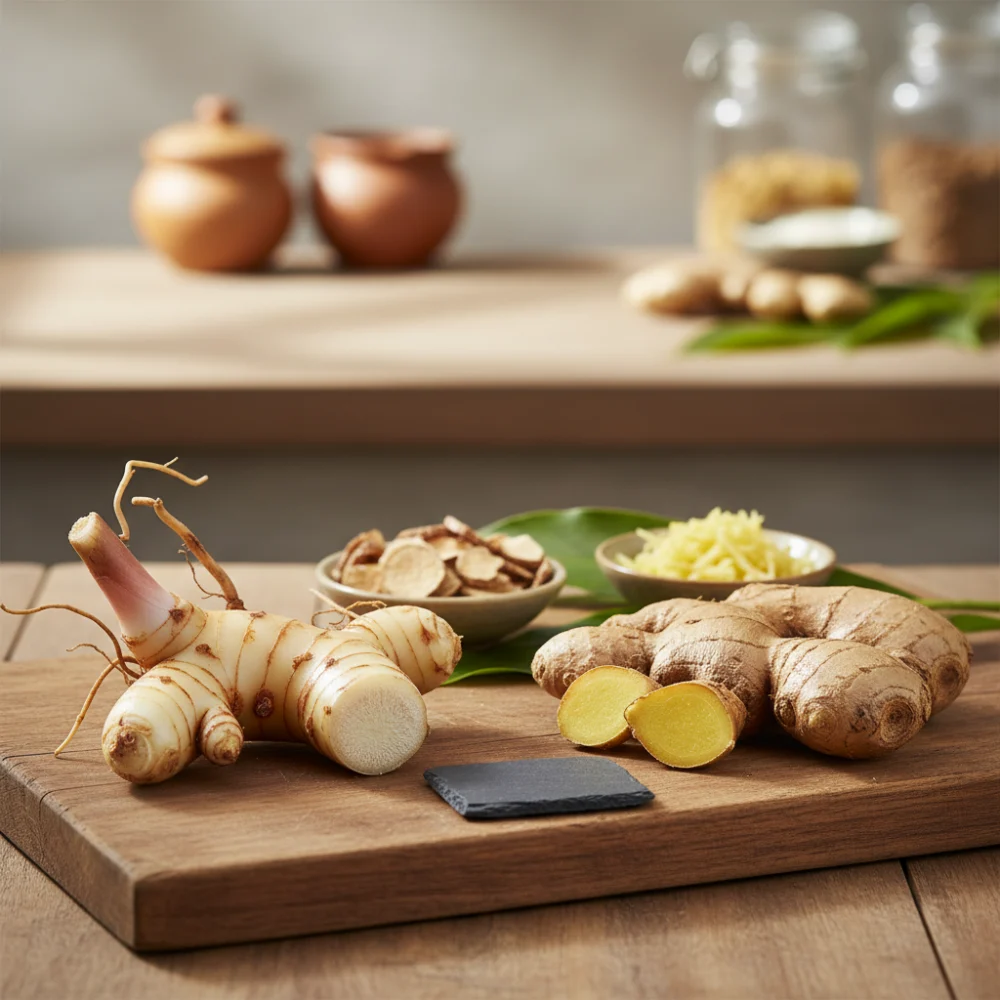
If you have ever wandered through an Asian market or attempted to cook an authentic Thai curry, you have likely encountered a rhizome that looks suspiciously like ginger but behaves very differently. This ingredient is galangal. While they are botanical cousins in the Zingiberaceae family, galangal and ginger are far from identical twins. Mistaking one for the other can drastically alter the flavor profile of your dish. This guide will walk you through exactly what galangal is and the step-by-step process of distinguishing it from common ginger.
Step 1: Inspecting the Skin and Appearance
The first step in telling these two rhizomes apart is a visual inspection. While both look like knobby roots, their skin tells a different story. Ginger typically has a thin, papery skin that is light brown or tan. It can often be scraped off easily with a spoon or fingernail. The flesh inside is usually yellow and fibrous.
Galangal, on the other hand, has a much smoother, paler, and shinier skin. It often features distinct circular rings along the root, resembling bamboo. The skin is significantly harder and cannot be scraped off easily; it generally requires a sharp knife to peel. When you look at them side-by-side, galangal appears more translucent and harder, almost wood-like, compared to the softer, earthier look of ginger.
Step 2: Testing the Texture and Hardness
Once you have visually identified the roots, the next step is to feel the texture. This is crucial for preparation. Pick up a piece of ginger; you will notice it yields slightly to pressure and can be sliced with a standard kitchen knife with moderate ease. Fresh ginger is juicy and tender.
Now, handle the galangal. You will immediately notice it is much denser and harder. In fact, mature galangal is so tough that it is often described as woody. slicing through it requires a sharp chef’s knife and a bit of force. If you try to grate galangal using a standard ginger grater, you may struggle; it is often better sliced into discs or pounded into a paste using a mortar and pestle.
Step 3: Comparing the Aroma and Flavor Profile
The most defining difference lies in the taste and smell. To truly understand the difference, you must smell a fresh slice of each. Ginger offers a warm, spicy, and sweet aroma. It provides a distinct "zing" that creates a sensation of heat on the tongue, which is why it is popular in teas and baking.
Galangal is entirely different. It possesses a sharp, citrusy, and pine-like aroma. The flavor is cooling rather than heating, with strong notes of earthy pepper and camphor. It lacks the sugary sweetness of ginger. Because of this, galangal is essential for the bright, floral notes found in soups like Tom Yum or Tom Kha Gai, whereas ginger would make these dishes taste muddy and overly spicy.
Step 4: determining Culinary Uses and Substitutions
Knowing when to use which root is the final step in mastering these ingredients. Use ginger when you want warmth and spice. It is versatile, appearing in stir-fries, marinades, teas, and desserts like gingerbread. It pairs well with garlic and soy sauce.
Use galangal specifically for Southeast Asian cuisines, particularly Thai, Indonesian, and Malaysian dishes. It is a key ingredient in curry pastes. Important Note: You generally cannot substitute ginger for galangal. If a recipe calls for galangal and you use ginger, the dish will lose its signature citrusy depth. If you cannot find fresh galangal, dried slices or galangal paste are better substitutes than fresh ginger.
In conclusion, while galangal and ginger may share a family tree, they are unique ingredients with distinct roles in the kitchen. Ginger brings the heat and sweetness familiar to many Western and Asian dishes, while galangal offers a complex, piney, and citrusy punch that defines many Southeast Asian classics. By paying attention to the skin texture, hardness, and aroma, you can easily ensure you are using the correct rhizome for your culinary creation.

Related Posts