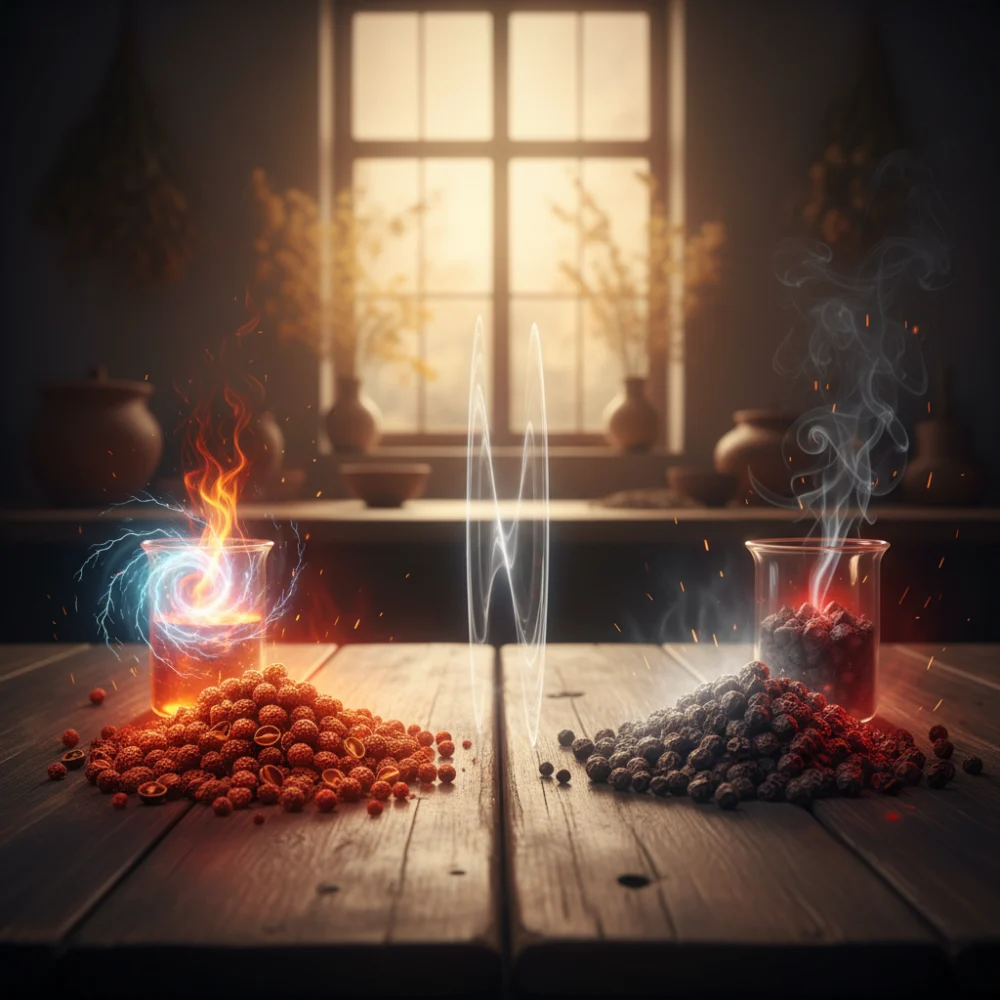
When exploring world cuisines, particularly Asian flavors, you will inevitably encounter Sichuan peppercorns (Hua Jiao). While often grouped with traditional spices like black pepper, their contribution to heat and sensation is fundamentally different. Black pepper provides a sharp, immediate pungency, whereas Sichuan pepper delivers a unique numbing sensation known as ‘mala.’ This guide offers a step-by-step comparison to help you distinguish and utilize these two powerful spices effectively.
Black pepper (Piper nigrum) contains piperine, the compound responsible for its familiar biting heat that stimulates pain receptors on the tongue. Sichuan pepper (Zanthoxylum piperitum) contains hydroxy-alpha-sanshool, which interacts with nerve endings to create a tingling, vibrating, and ultimately numbing effect, rather than pure capsaicin-style burn.
Step 1: Identifying the Source and Appearance
Before tasting, it is essential to correctly identify the spices:
- Black Pepper: These are dried berries from the Piper nigrum vine. They are small, round, dark brown to black, and have a wrinkled surface. The heat is consistent across the entire peppercorn.
- Sichuan Pepper: These are the dried husks (pericarps) of the prickly ash tree seeds. They are reddish-brown to deep mahogany, much larger than black peppercorns, and often appear split open, revealing a tiny black seed inside (which is usually discarded as it is bitter).
Step 2: Assessing the Initial Aroma
The olfactory experience sets the stage for the heat profile. Toasting both spices briefly in a dry pan enhances their volatile oils:
- Black Pepper Aroma: The aroma is sharp, woody, and immediately pungent. It suggests a direct, fiery heat upon consumption.
- Sichuan Pepper Aroma: The aroma is complex, often described as lemony, floral, and slightly resinous. It lacks the immediate sharp burn associated with black pepper, hinting instead at a more complex sensory interaction.
Step 3: The Immediate Taste Test (The Heat Factor)
This step requires a very small sample of each spice, ideally ground separately. Do not consume large amounts until you understand the intensity.
- Black Pepper Experience: Upon chewing or tasting, black pepper delivers an immediate, sharp, and localized heat sensation. This heat builds quickly, peaking rapidly, and then dissipates relatively smoothly. It is a true ‘hot’ sensation.
- Sichuan Pepper Experience: The initial taste might be mild or citrusy. The ‘heat’ does not register as immediate burning. Instead, within a few seconds, the tongue begins to tingle. This progresses into a buzzing, vibrating, or numbing sensation that makes the mouth feel slightly heavy or anesthetized.
Step 4: Analyzing the Duration and Type of Sensation
The defining difference lies in how long the sensation lasts and what kind of receptors it activates:
- Black Pepper Duration: The pungency is transient. While noticeable for several minutes, the sharp burn fades relatively quickly, leaving a lingering warmth.
- Sichuan Pepper Duration: The numbing effect (mala) can persist much longer than black pepper’s heat. The tingling sensation can linger for 10 to 20 minutes, depending on the quantity consumed. This numbness is crucial because it allows diners to tolerate higher levels of actual chili heat (capsaicin) in Sichuan dishes without being overwhelmed.
Step 5: Culinary Application Based on Desired Effect
Understanding the heat profile dictates how you should use them in your cooking:
- Use Black Pepper When: You need assertive, straightforward heat, sharpness, or a familiar peppery backbone. It works well in rubs, simple sauces, and finishing dishes where a classic bite is required.
- Use Sichuan Pepper When: The goal is to create complexity, mouthfeel, and the signature ‘mala’ effect. It is fundamental in stir-fries, dry rubs for fatty meats, and infused oils where the numbing quality balances rich flavors.
In conclusion, while both are essential spices, their definition of ‘heat’ varies dramatically. Black pepper provides conventional, sharp pungency driven by piperine. Sichuan pepper offers a unique sensory experience—a tingling numbness caused by hydroxy-alpha-sanshool—that fundamentally alters the perception of flavor and spice in any dish. Mastering the use of both ensures a richer, more nuanced culinary repertoire.

Related Posts