
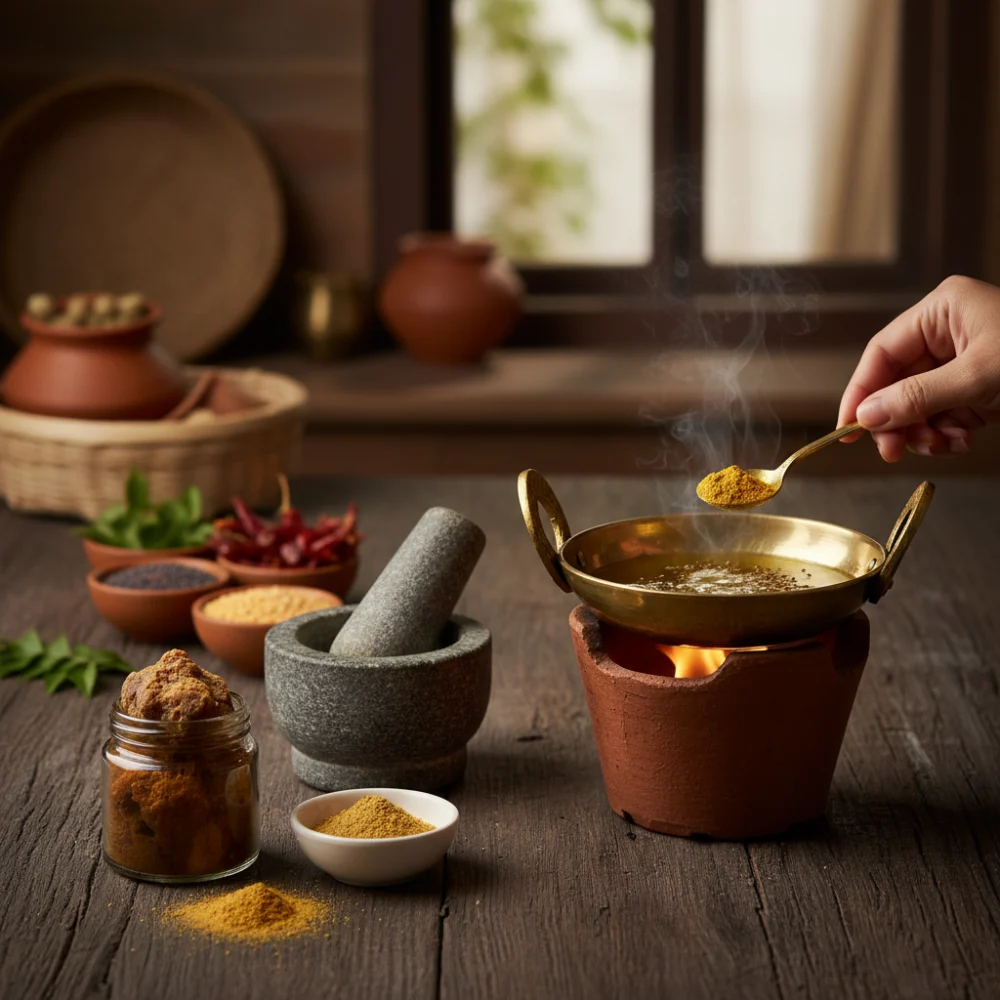
Asafoetida, commonly known as Hing in India, is one of the most misunderstood yet essential ingredients in South Asian cuisine. Biologically, it is a dried latex (gum oleoresin) exuded from the taproot of several species of Ferula, a perennial herb. In its raw form, asafoetida has a pungent, sulfurous odor, earning it the nickname ‘Devil’s Dung.’ However, when cooked in hot fat, it undergoes a miraculous transformation. The smell mellows out and is replaced by a smooth, savory flavor reminiscent of leeks, onions, and garlic. Beyond its culinary use as a flavor enhancer, it is revered in Ayurveda for its digestive properties, often used to reduce bloating and gas.
Requirements for Using Asafoetida
To use Hing effectively, you do not need complex equipment, but you do need the right medium to release its essential oils. Here is what you will need:
- Asafoetida (Hing): Either in compounded powder form (yellow) or pure crystal form (brown).
- Cooking Fat: Ghee (clarified butter) or vegetable oil are the best carriers for its flavor.
- Heat Source: A stove and a small frying pan or tadka ladle.
- Storage Container: An airtight glass jar to prevent the strong aroma from permeating your pantry.
Step 1: Identify Your Type of Asafoetida
Before cooking, it is crucial to know which version of the spice you possess. Most commercial Hing sold in supermarkets is compounded powder. This is usually 30% resin mixed with rice flour or wheat flour and gum arabic to keep it free-flowing and less potent. If you have the pure lump resin, it is extremely strong. You will need to crush a tiny piece of the resin using a mortar and pestle before use. Knowing the difference ensures you do not overpower your dish; you need significantly less of the pure resin compared to the compounded powder.
Step 2: The Tempering Technique (Tadka)
The most traditional and effective way to use asafoetida is through a process called blooming or tempering (Chhonk/Tadka). You should never sprinkle raw Hing directly onto a finished dish like you might with salt or pepper. Instead, heat a tablespoon of oil or ghee in a pan over medium-high heat. Once the fat is shimmering hot, add your pinch of Hing. It should sizzle immediately. This brief exposure to hot fat dissolves the resin and releases the savory, umami-rich oils while eliminating the raw, sulfurous smell.
Step 3: Measure Correctly and Time it Right
Asafoetida is potent, and a little goes a long way. For a standard curry or dal serving four people, a generous pinch (roughly 1/8th to 1/4th of a teaspoon of the compounded powder) is sufficient. If using pure resin, use a piece the size of a peppercorn. Timing is critical: Hing burns very quickly. It should be in the hot oil for only 5 to 10 seconds before you add liquid ingredients or other spices like cumin and mustard seeds. If it turns black, it has burned and will taste bitter; it should remain a golden or light brown color.
Step 4: Using as an Onion and Garlic Substitute
For those following a low-FODMAP diet, or for religious dietary restrictions (such as Jain vegetarianism) that exclude root vegetables, Hing is the perfect substitute for onions and garlic. To achieve this base flavor, add the Hing to your hot oil as described in Step 2, and then immediately follow with ginger and turmeric. This combination mimics the depth and savory profile that sautéed onions and garlic usually provide to soups, stews, and curries.
Step 5: Proper Storage
Once you have opened your container of Asafoetida, proper storage is a vital step in the usage process. The volatile oils are so strong that they can flavor other ingredients in your cupboard. Keep the original container inside a second, air-tight glass jar or a sealed plastic container. Store it in a cool, dark place to preserve its potency. If stored correctly, compounded Hing can last for over a year, while the pure resin can last indefinitely.
Conclusion
Mastering the use of Asafoetida is a game-changer for home cooks looking to elevate their vegetarian dishes. By understanding that it must be cooked in fat to unlock its true potential, you can add a complex, savory depth to lentils, vegetables, and broths. Whether you are using it to aid digestion or as a flavor substitute for alliums, a single pinch of this powerful resin is all it takes to transform a meal from ordinary to extraordinary.

Related Posts