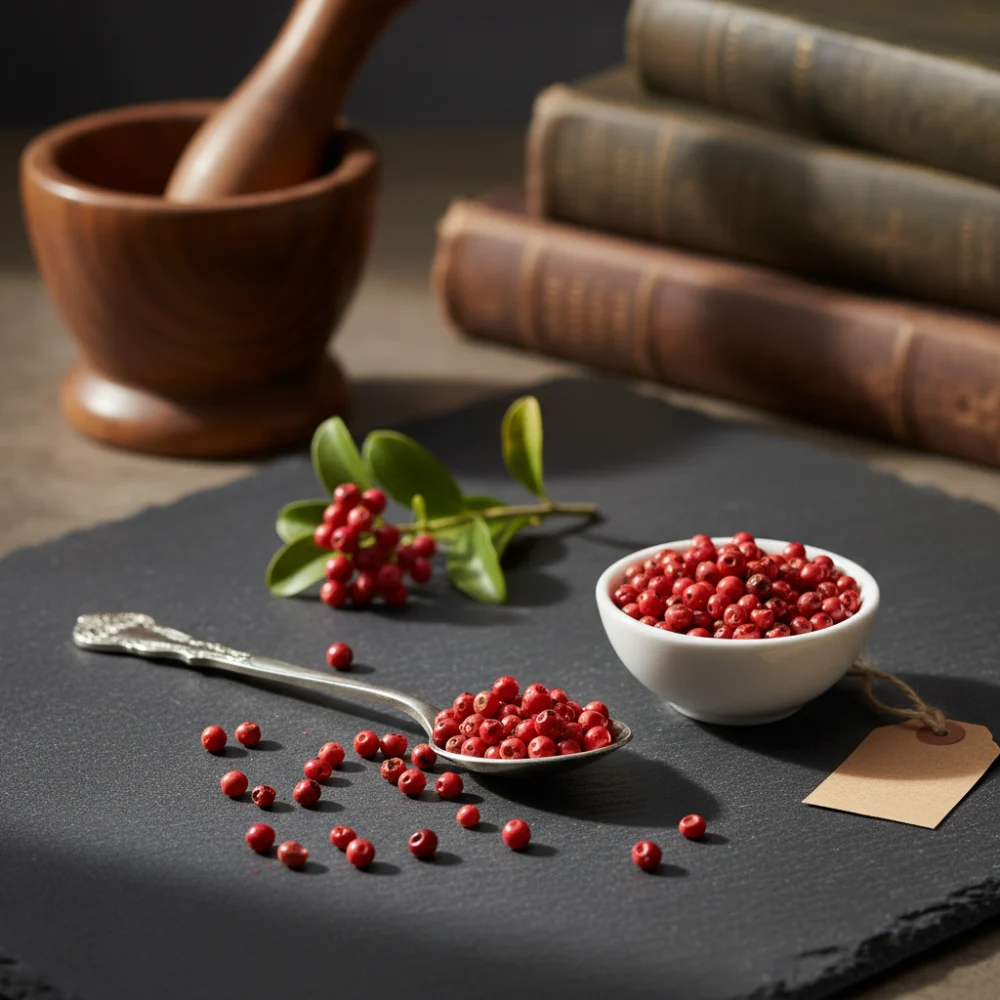
If you have ever ground a multi-colored pepper blend over your salad, you have likely encountered the pink peppercorn. With its vibrant ruby hue and delicate paper-like shell, it adds a stunning visual contrast to black and white peppercorns. However, despite its name and appearance, the pink peppercorn is biologically unrelated to the true black pepper vine (Piper nigrum). Understanding this distinction is the first step to mastering this unique ingredient in the kitchen.
This guide will walk you through exactly what pink peppercorns are, where they come from, and how to utilize their distinct flavor profile. Unlike the spicy heat of standard table pepper, these berries offer a sweet, pine-like complexity that can elevate both savory dishes and desserts. Follow these steps to become an expert on this culinary imposter.
Step 1: Understand the Botanical Origins
The first step in defining a pink peppercorn is looking at its family tree. True peppercorns (black, white, and green) all come from the same vine in India. Pink peppercorns, however, are the dried berries of the shrub Schinus molle (the Peruvian pepper tree) or Schinus terebinthifolia (the Brazilian pepper tree). These trees are actually members of the Anacardiaceae family, which makes them relatives of cashews, mangoes, and pistachios. This distinction is vital not just for botany trivia, but for understanding the flavor and potential allergens.
Step 2: Analyze the Flavor Profile
Once you understand that it is a berry and not a pepper, you can better appreciate its taste. To identify a pink peppercorn, look for the following sensory characteristics:
- Texture: The shell is fragile and papery, crumbling easily between your fingers, unlike the hard, rock-like density of a black peppercorn.
- Taste: It lacks the sharp, nose-tingling heat of black pepper. Instead, it possesses a fruity, sweet, and slightly resinous flavor often described as floral or citrusy with a hint of pine.
- Aftertaste: It leaves a lingering sweetness rather than a spicy burn.
Step 3: Select and Store Quality Berries
When purchasing pink peppercorns, you will often find them sold alone or mixed into blends. For the best culinary experience, buy them whole. Pre-ground pink pepper loses its volatile oils and delicate flavor rapidly. Look for berries that are bright pink or red; brown or grey berries indicate age or poor drying processes. Store them in an airtight container in a cool, dark place. Because they contain more moisture and sugar than true peppercorns, they have a shorter shelf life and can spoil if exposed to humidity.
Step 4: Master Culinary Applications
Because pink peppercorns are delicate and fruity, they should be treated differently than black pepper. Do not put them in a standard pepper mill alone, as their soft shells can clog the mechanism. Instead, crush them gently with a mortar and pestle or the flat side of a chef’s knife. Their flavor pairs exceptionally well with:
- Light Proteins: Fish, scallops, and poultry.
- Creamy Sauces: They cut through the richness of heavy cream or butter sauces.
- Desserts: Surprisingly, they are excellent with dark chocolate, strawberries, or sprinkled over vanilla ice cream.
- Cocktails: They add a floral aromatic note to gin and tonics.
Step 5: Review Safety and Allergy Information
This is the most critical step for safety. Because pink peppercorns are related to cashews, individuals with tree nut allergies may experience adverse reactions. It is essential to label any dish containing pink peppercorns if you are serving guests. Additionally, while generally safe for consumption, they can be toxic to small animals and should be kept away from pets. In very large quantities, they can cause digestive upset in humans, so they are best used as a garnish or a spice, rather than a main ingredient.
Conclusion
Pink peppercorns are a fascinating example of how culinary naming conventions can be misleading. While they are not true peppers, their contribution to the culinary world is undeniable. By understanding their botanical roots as dried berries from the cashew family, you can better utilize their sweet, resinous, and floral notes to create sophisticated flavor profiles. Whether you are dressing a vinaigrette or garnishing a chocolate tart, the pink peppercorn is a versatile tool in any chef’s arsenal.

Related Posts