
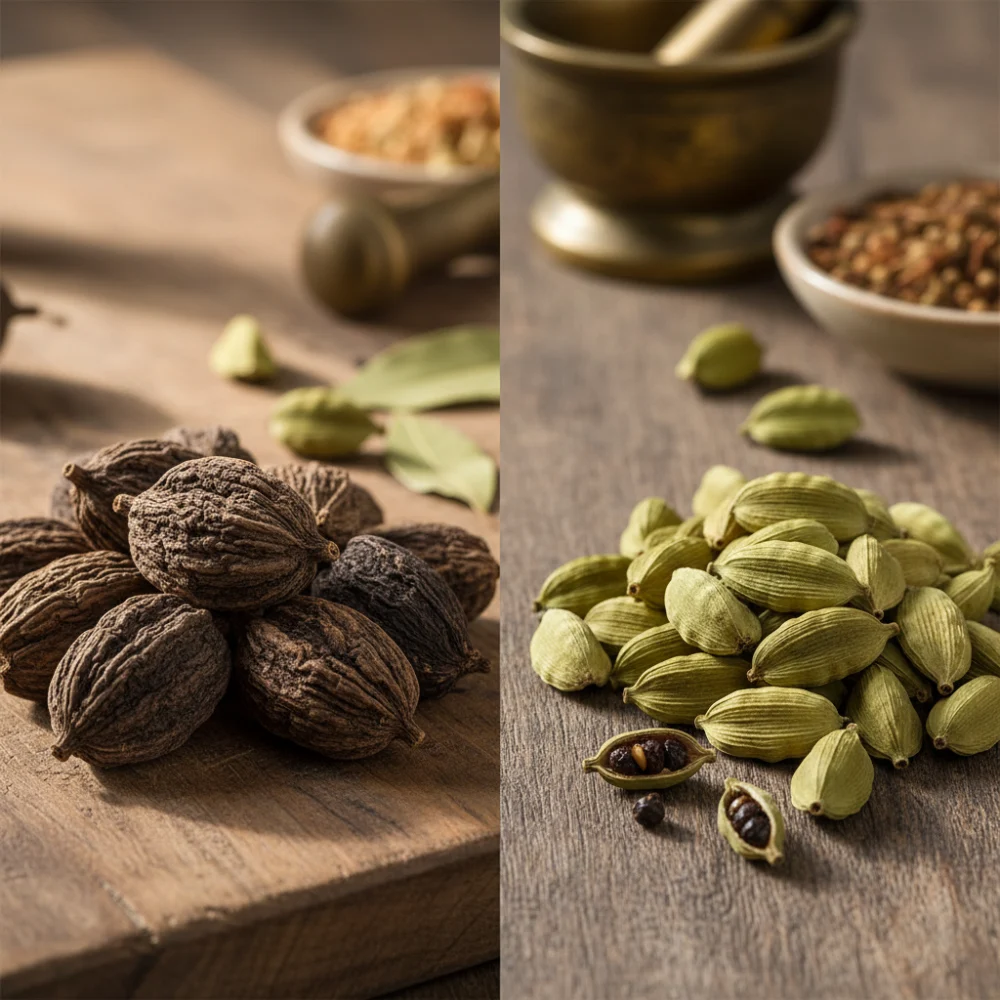
Cardamom is often hailed as the Queen of Spices, but for many home cooks, the distinction between its two primary varieties can be confusing. While they share a name and belong to the same ginger family (Zingiberaceae), Black Cardamom and Green Cardamom are entirely different ingredients with unique flavor profiles, processing methods, and culinary uses. Mistaking one for the other can drastically alter the outcome of a dish. This guide will walk you through the essential steps to distinguishing these spices and understanding exactly when to use each one.
Requirements for Identification
To fully understand the differences as you follow this guide, it is helpful to have the following items on hand, though reading through is sufficient for learning:
- Whole Green Cardamom Pods: Look for bright green, smooth pods.
- Whole Black Cardamom Pods: Look for large, dark brown, wrinkled pods.
- Mortar and Pestle: To crush the pods and release the aromatics.
- Hot Water: To steep the spices for a sensory evaluation.
Step 1: Distinguishing by Visual Appearance
The most immediate difference between the two spices is their look. Green Cardamom (Elettaria cardamomum) is harvested before it reaches full maturity to preserve its color. The pods are small, oval-shaped, and possess a smooth, papery green husk. Inside, you will find small, sticky black seeds.
In contrast, Black Cardamom (Amomum subulatum) is significantly larger. The pods are dark brown to black, with a thick, tough, and wrinkled skin that resembles dried fruit. They are harvested much later in maturity and are dried over open fires, which contributes to their darkened appearance.
Step 2: Analyzing the Flavor Profile
Once you have identified them visually, the next step is to understand the aroma and taste, as they are rarely interchangeable.
- Green Cardamom: This variety is known for its intense aromatic capabilities. It has a complex flavor profile that is floral, sweet, and slightly eucalyptus-like with hints of citrus. It is bright and cooling on the palate.
- Black Cardamom: This spice offers a stark contrast. Due to the traditional fire-drying process, it carries a distinct smoky aroma. The flavor is earthy, resinous, and contains notes of camphor and menthol. It is warming and much more robust than its green counterpart.
Step 3: Determining the Culinary Application
Because their flavors are so distinct, they serve different roles in the kitchen. To use them correctly, follow these general rules:
Use Green Cardamom for: Sweet dishes and desserts (like rice pudding or cookies), tea (chai), and lighter curries. It acts as a top note in spice blends, adding brightness. It is also commonly used in Scandinavian baking.
Use Black Cardamom for: Savory, heavy dishes. It shines in slow-cooked stews, meat curries, and rustic lentil dishes. It is a key ingredient in Garam Masala but is rarely used in desserts due to its smoky, camphor-heavy taste. It acts as a base note, providing depth and heat.
Step 4: Understanding Preparation and Usage
The method of using these pods also differs slightly based on the desired intensity.
- Green Cardamom: You can use the whole pod (lightly crushed) to infuse oils or liquids, or you can remove the seeds and grind them into a fine powder for baking. The husk is often discarded after grinding seeds.
- Black Cardamom: These are almost always used whole or slightly crushed in hot oil to release their essential oils into a curry base. The thick skin is fibrous and difficult to grind into a fine powder, so if used in a spice blend, it must be strained or ground very thoroughly using industrial grinders.
In conclusion, while Green and Black Cardamom are botanical cousins, they are culinary strangers. Green Cardamom brings sophistication, sweetness, and floral notes suitable for desserts and light gravies. Black Cardamom brings rustic robustness, smoke, and earthiness essential for hearty meats and stews. By understanding these fundamental differences, you can ensure you never ruin a sweet pudding with a smoky pod or make a savory stew taste too floral.

Related Posts