Ginger is a versatile spice used worldwide, but the choice between fresh and dried forms can significantly impact your cooking. While they come from the same plant, their chemical compositions and flavor profiles differ due to the drying process. Understanding these nuances is essential for any home cook or professional chef looking to master the art of seasoning.
Requirements for comparison:
- Fresh ginger root knobs
- Ground dried ginger
- A kitchen grater or microplane
- A sharp knife
- Measuring spoons for substitution
Step 1: Understand the Flavor Profiles
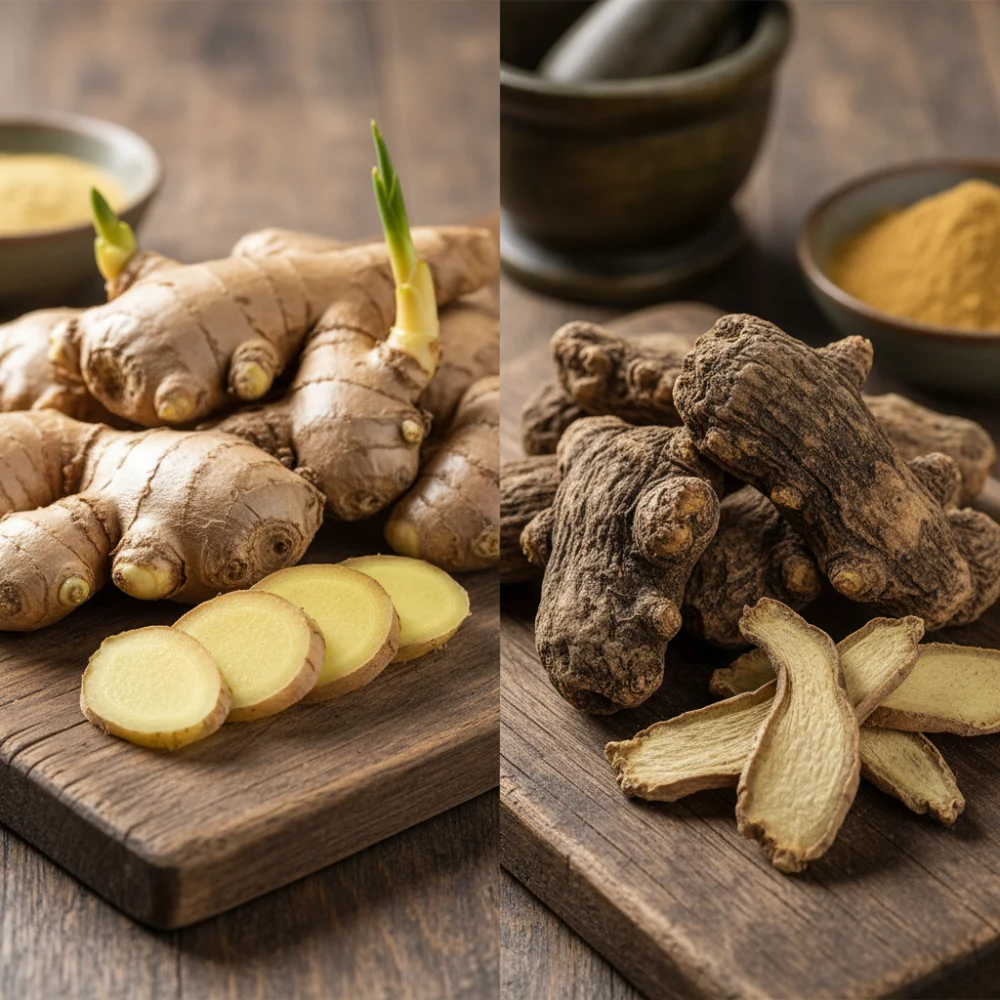
Fresh ginger has a pungent, spicy, and slightly sweet taste with citrusy undertones. It contains gingerol, which provides a sharp heat. Dried ginger, on the other hand, undergoes a chemical change where gingerol is converted to shogaol. This makes dried ginger much more concentrated and spicier, but it loses the bright, fresh notes of the raw root. Use fresh for zing and dried for deep, warm spice.
Step 2: Evaluate the Texture and Consistency
Fresh ginger is fibrous and juicy, making it ideal for stir-fries, marinades, and teas where you want a bite or a liquid infusion. Dried ginger is a fine powder, making it perfect for baking, spice rubs, and spice blends like curry powder. Because it is dry, it integrates seamlessly into batters and doughs without adding moisture or changing the texture of the finished product.
Step 3: Apply Proper Substitution Ratios
If a recipe calls for fresh ginger and you only have dried, or vice versa, you must adjust the quantities to avoid overpowering the dish. A general rule of thumb is to use 1/4 teaspoon of ground ginger for every 1 tablespoon of freshly grated ginger. Because ground ginger is highly concentrated and lacks the water content of the fresh root, this ratio maintains the intended heat level.
Conclusion: Choosing between fresh and dried ginger depends on the desired intensity and texture of your dish. Use fresh ginger for bright, aromatic heat in savory dishes and teas, and reach for dried ginger when baking cookies or creating complex spice mixes. Understanding these differences ensures your culinary creations are balanced and flavorful.

Related Posts