
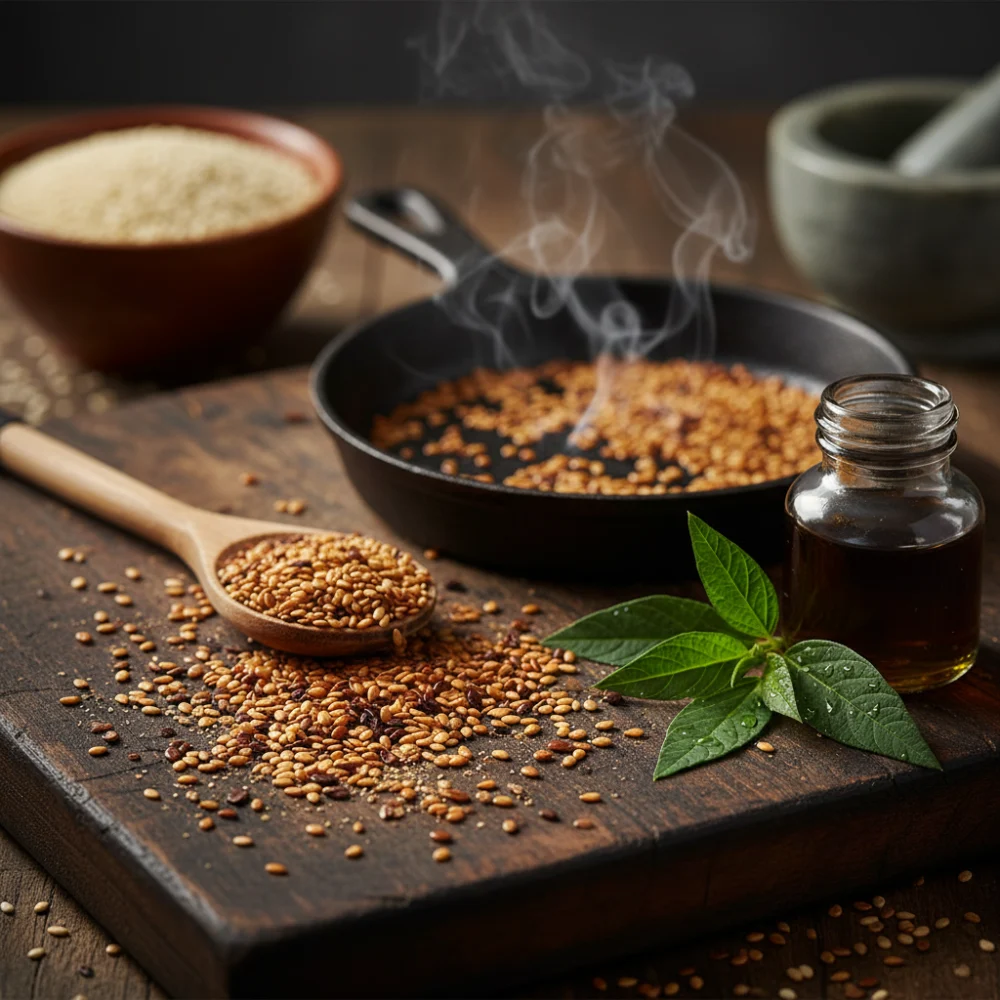
Sesame seeds are a staple in global cuisines, but their true potential is often hidden behind a raw, mild exterior. By applying controlled heat, you initiate the Maillard reaction, transforming these tiny seeds into flavor powerhouses with a distinct nutty profile. This guide explores the systematic process of unlocking those deep aromatic qualities through proper toasting techniques.
Essential Requirements
To begin your culinary exploration, you will need the following items:
- High-quality raw white or black sesame seeds
- A heavy-bottomed stainless steel or cast iron skillet
- A wooden spatula for consistent stirring
- A flat plate or baking sheet for rapid cooling
- An airtight glass jar for storage
Step 1: Preparing the Raw Seeds
Start with fresh, high-quality raw seeds. Ensure your seeds are free of impurities or dust. If you choose to rinse them, they must be completely dry before toasting. Spread them on a clean kitchen towel and allow them to air dry for at least thirty minutes. Dry seeds toast more evenly and develop a superior crunch compared to damp ones.
Step 2: Executing the Stovetop Toast
Place your skillet over medium-low heat. Do not add oil or butter; the seeds contain ample natural oils that will be released during the heating process. Add the seeds in a thin, even layer to the dry pan. As the seeds heat up, stir them continuously using a rhythmic motion. This prevents the seeds at the bottom from scorching while those on top remain raw.
Step 3: Monitoring Color and Aroma
The transition from raw to toasted happens rapidly. Within three to five minutes, you will notice a shift from pale white to a warm, golden tan. Pay close attention to the fragrance; a rich, nutty, and slightly sweet aroma is the primary indicator of success. If the seeds begin to pop or jump in the pan, they are nearing completion. Avoid letting them turn dark brown, as this introduces a harsh, bitter flavor.
Step 4: Immediate Cooling and Preservation
A common mistake is leaving the seeds in the hot pan after turning off the stove. Residual heat will continue to cook the seeds, often leading to over-toasting. Transfer them immediately to a cold ceramic plate or baking sheet, spreading them out to stop the cooking process. Once they have reached room temperature, seal them in an airtight container to prevent the oils from oxidizing.
Conclusion
Exploring the nutty profile of toasted sesame is a simple yet rewarding way to enhance the complexity of your dishes. Whether sprinkled over a fresh salad, incorporated into a stir-fry, or used as a crust for proteins, these golden gems provide a sophisticated layer of flavor and texture that elevates home cooking to a professional level.

Related Posts