Many of the world’s most aromatic spices, such as turmeric, paprika, and cumin, contain flavor compounds that are hydrophobic, meaning they do not dissolve well in water. To truly unlock their potential, these spices require a lipid medium. Understanding the science of fat-solubility allows cooks to transform dull, gritty powders into vibrant, aromatic oils that coat every ingredient in a dish.
Essential Requirements for Flavor Release
- Whole or Ground Spices: Such as cumin seeds, coriander, or chili powder.
- Cooking Fat: High-quality oil, ghee, or butter.
- Heat Source: A stovetop and a heavy-bottomed pan.
- Aromatics: Optional additions like garlic or ginger to complement the spice oil.
Step 1: Choose Your Fat Medium
The first step is selecting a fat that complements your dish. Ghee and neutral oils like avocado or grapeseed are excellent because they have high smoke points. Butter adds a rich flavor but contains water and milk solids, so it must be handled carefully to prevent burning. The fat acts as a solvent, pulling the essential oils out of the spice cell walls and holding them in suspension.
Step 2: Controlled Heating
Place your pan over medium-low heat and add enough fat to coat the bottom. It is crucial not to overheat the oil before adding the spices. If the oil is too hot, the spices will scorch instantly, turning bitter. The goal is to reach a temperature where the spices sizzle gently, which is usually between 300 and 350 degrees Fahrenheit.
Step 3: The Blooming Process
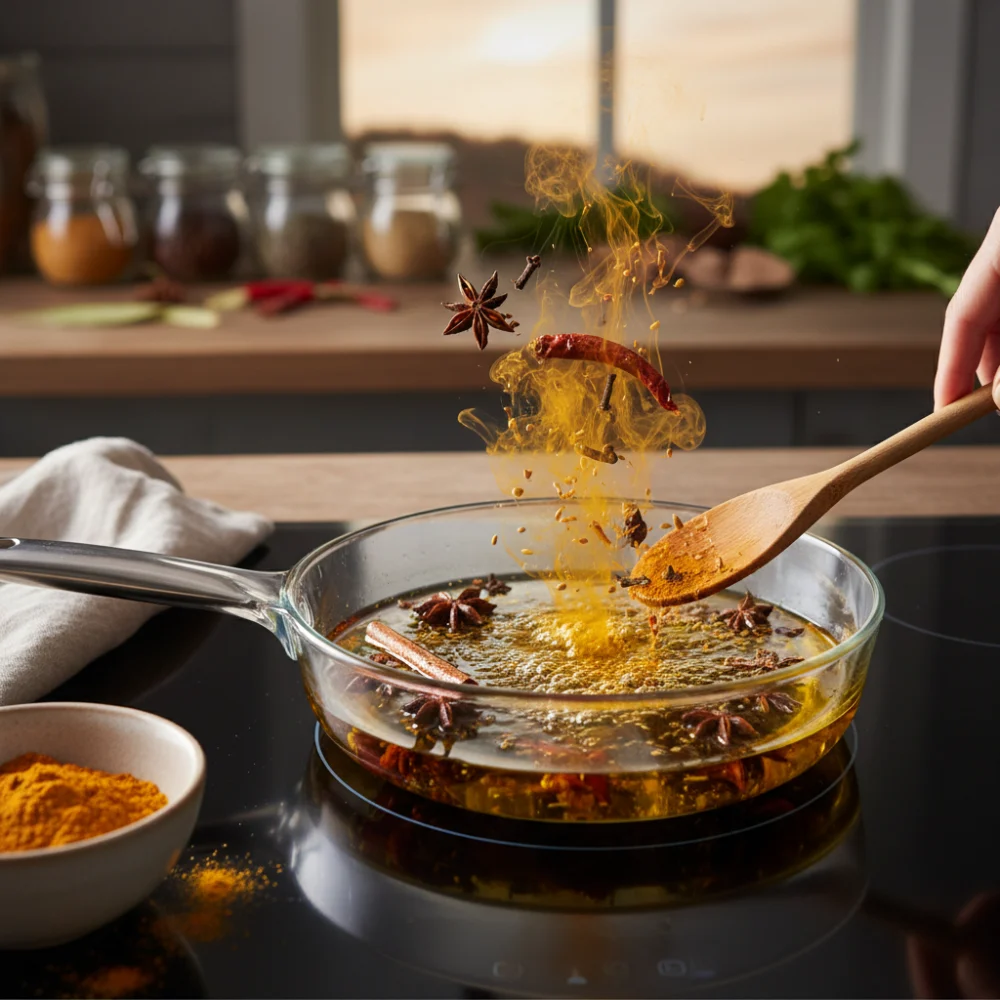
Add your spices to the warm fat. This technique, often called blooming or tempering, involves stirring the spices constantly for 30 to 60 seconds. You will notice the oil changing color as the fat-soluble pigments, like the curcumin in turmeric or the carotenoids in paprika, bleed into the fat. This visual change indicates that the flavor compounds are successfully being extracted.
Step 4: Monitoring the Aroma
As the spices heat up, the volatile oils begin to evaporate and fill the air with a deep fragrance. This is the moment when the spices are at their peak. Once the aroma becomes intense and the spices look slightly toasted, it is time to add your liquid ingredients or vegetables. Adding moisture at this point stops the frying process and prevents the spices from burning.
Conclusion
Mastering the release of fat-soluble flavors is a fundamental skill that separates amateur cooking from professional-grade cuisine. By blooming your spices in a fat medium, you ensure that the flavor is evenly distributed throughout the dish rather than remaining trapped inside the spice particles. This simple adjustment in technique results in a more cohesive, aromatic, and visually stunning meal.

Related Posts