
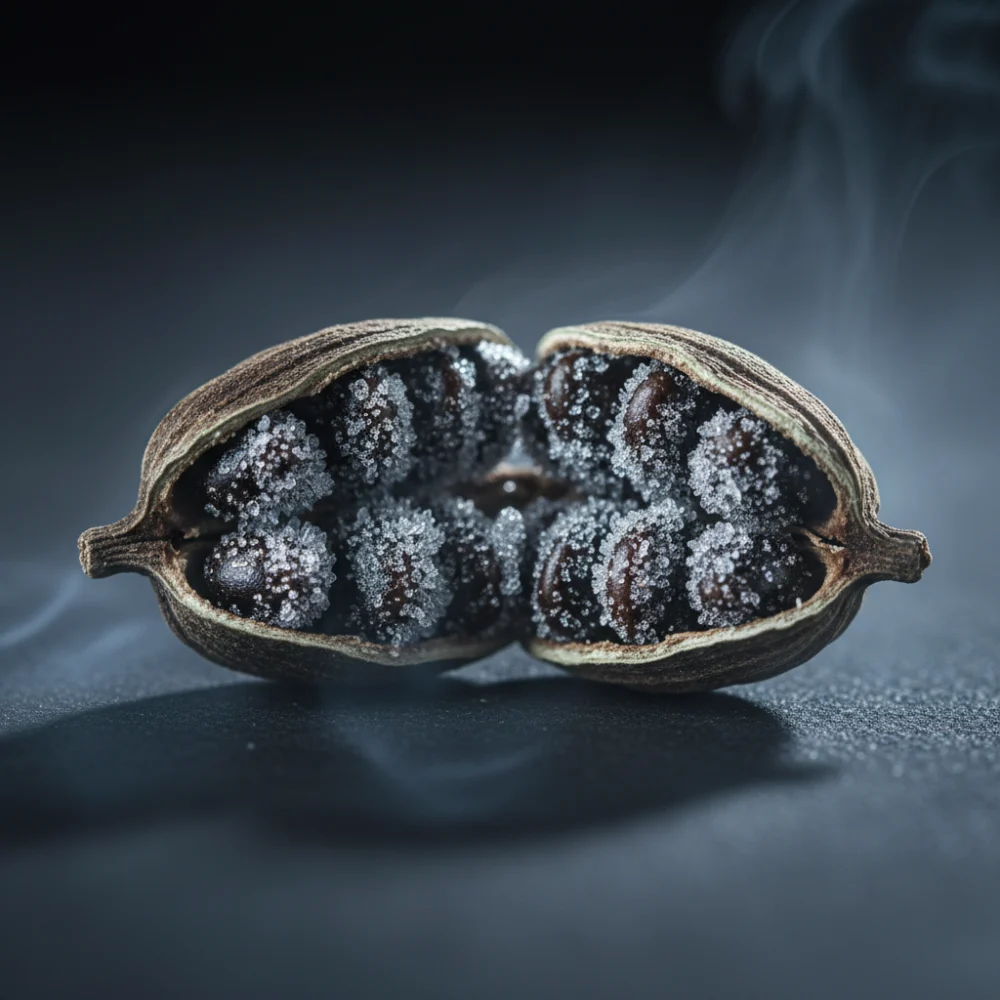
Black cardamom, often referred to as the Queen of Spices in certain Himalayan regions, possesses a distinct aromatic profile that differs significantly from its green counterpart. While green cardamom is floral and sweet, black cardamom is defined by its intense smokiness and a sharp, mentholated undertone. This guide explores how to harness these camphor-like qualities to elevate savory dishes and create complex depth in your culinary creations.
Essential Requirements
- High-quality Black Cardamom Pods: Look for large, plump pods that are dark brown and oily to the touch, indicating fresh essential oils.
- Mortar and Pestle: This is necessary for cracking the tough, fibrous outer skin without completely pulverizing the seeds inside.
- Cooking Fat: Use ghee, butter, or a neutral oil to help dissolve the fat-soluble cineole compounds responsible for the menthol scent.
- Heat Source: A controlled flame or induction top is vital to avoid scorching the delicate oils during the tempering phase.
Step 1: Identifying the Mentholated Notes
Before you begin cooking, it is important to understand the specific fragrance of the spice. Crush a single pod slightly and inhale deeply. You will notice a cooling sensation similar to eucalyptus or mint. This is due to high concentrations of 1,8-cineole. Recognizing this profile allows you to determine how much of the spice is needed for your specific recipe without overwhelming other ingredients.
Step 2: Proper Preparation Techniques
To access the mentholated core of the spice, you must break the woody husk. For a subtle infusion in soups or broths, use a mortar and pestle to gently crack the pod while keeping it mostly intact. For a more aggressive flavor profile in dry rubs or masalas, remove the sticky black seeds from the husk and grind them into a coarse powder. Remember that the husk itself provides the most smokiness, while the seeds hold the cooling menthol essence.
Step 3: Tempering to Release Aromatics
The mentholated compounds in black cardamom are primarily fat-soluble. To maximize their impact, add the cracked pods to hot oil or ghee at the very beginning of the cooking process. This technique, known as tempering, allows the heat to draw out the cineole and disperse it throughout the base of your dish. This ensures a consistent flavor profile that lingers on the palate rather than being concentrated in a single bite.
Step 4: Balancing with Complementary Spices
Because the mentholated profile can be quite overpowering, it must be balanced carefully with other aromatics. Pair black cardamom with warm, earthy spices like cumin, cloves, and cinnamon. The cooling effect of the cardamom acts as a necessary counterpoint to the heat of chilies and the deep earthiness of turmeric, creating a complex, multi-dimensional flavor profile that is characteristic of high-end South Asian cuisine.
Mastering the use of black cardamom requires an appreciation for its dual nature as both a smoky and a cooling ingredient. By focusing on the mentholated characteristics through proper preparation and fat-based tempering, you can transform ordinary stews, braises, and rice dishes into gourmet experiences. Always start with a small amount, as the cooling camphor notes can easily dominate a dish if not handled with precision.

Related Posts