
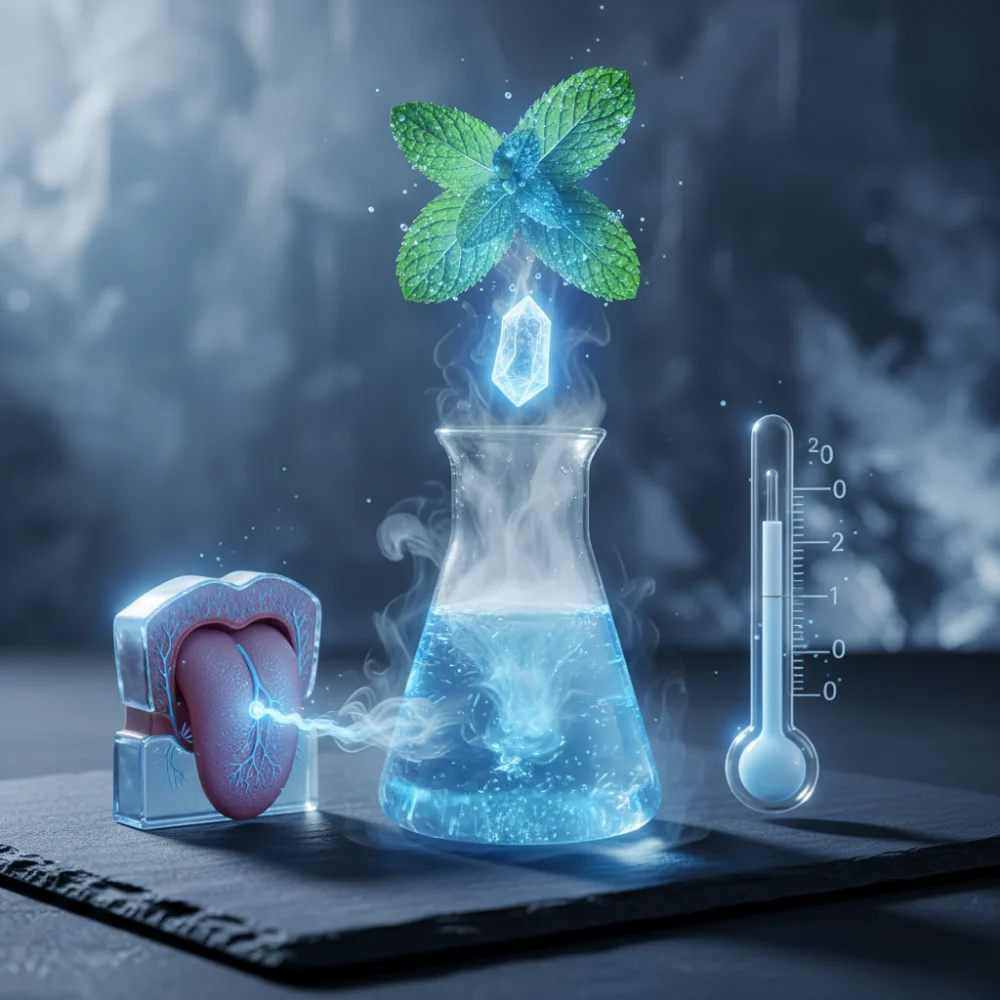
Menthol is a cyclic terpene alcohol found naturally in peppermint and other mint oils. It is widely recognized for its distinct aroma and the cooling sensation it produces on the skin and mucous membranes. Unlike ice, which physically lowers the temperature of an object, menthol creates a sensory illusion by interacting directly with the body’s nervous system. Understanding this process requires a look into molecular biology and the specific receptors responsible for detecting temperature changes.
1. Identify the TRPM8 Receptor
The primary player in the menthol cooling effect is a protein called TRPM8 (Transient Receptor Potential Melastatin 8). This is a specialized ion channel located on sensory neurons. Under normal conditions, TRPM8 is activated by cold temperatures, typically those below 25 degrees Celsius (77 degrees Fahrenheit). When activated, it allows calcium ions to flow into the nerve cell, sending an electrical signal to the brain that signifies a cold sensation.
2. The Chemical Interaction
Menthol has a unique molecular shape that allows it to bind directly to the TRPM8 receptor. When you consume mint or apply a mentholated balm, the menthol molecules latch onto these receptors. This binding lowers the temperature threshold at which the receptor activates. Essentially, menthol makes the receptor think it is cold even at room temperature. This is why a glass of room-temperature water feels icy cold after you have chewed mint gum; the receptors are already in a hyper-sensitized state.
3. The Brains Interpretation
Once the TRPM8 receptors are triggered by menthol, they send a flurry of signals through the trigeminal nerve or other sensory pathways to the brain. The brain receives these signals and interprets them as a drop in temperature. Because the brain relies on these electrical pulses to understand the environment, it cannot distinguish between a physical drop in temperature and the chemical stimulation caused by menthol. This results in the characteristic cooling sensation that persists until the menthol molecules are washed away or metabolized.
4. Practical Experimentation
To witness this effect firsthand, you can perform a simple experiment. You will need:
- Fresh peppermint leaves or menthol-infused gum
- A glass of water at room temperature
- A thermometer to verify the water temperature
First, measure the water temperature to confirm it is not cold. Next, chew the mint for one minute. Finally, drink the water. You will notice an intense chilling sensation in your mouth and throat, despite the thermometer showing no change in the liquid’s temperature.
In conclusion, the cooling effect of menthol is a brilliant example of how chemistry can bypass physical reality to influence our perception. By targeting the TRPM8 receptors, menthol provides a refreshing sensation that is utilized in everything from medicinal rubs to culinary delights. It is not a change in thermal energy, but a sophisticated biological trick played on our sensory nervous system.

Related Posts