Understanding the Chemistry of Heat and Spices
Toasting spices is a fundamental culinary technique that relies on the application of dry heat to alter the chemical composition of whole seeds, barks, and pods. At a molecular level, spices contain volatile oils that hold their characteristic aromas and flavors. When these spices are raw, the oils are often trapped within the cellular structure. Applying heat causes these oils to expand and migrate to the surface, making them more accessible to the palate and the nose.
The Role of the Maillard Reaction
Beyond simple oil release, toasting triggers the Maillard reaction. This is a chemical reaction between amino acids and reducing sugars that gives browned food its distinctive flavor. In spices, this process creates new, complex compounds that are often described as nutty, earthy, or smoky. This transformation is why a toasted cumin seed tastes significantly different—richer and more rounded—than a raw one.
Essential Requirements for Toasting
To successfully toast spices at home, you will need a few basic tools and ingredients:
- Whole Spices: It is essential to use whole seeds or pods rather than pre-ground powders, as powders burn too quickly and have already lost much of their volatile oil content.
- Heavy-Bottomed Skillet: A cast iron or stainless steel pan provides even heat distribution.
- Heat Source: A standard stovetop burner.
- Mortar and Pestle or Spice Grinder: For processing the spices after they have cooled.
Step 1: Selecting and Cleaning Your Spices
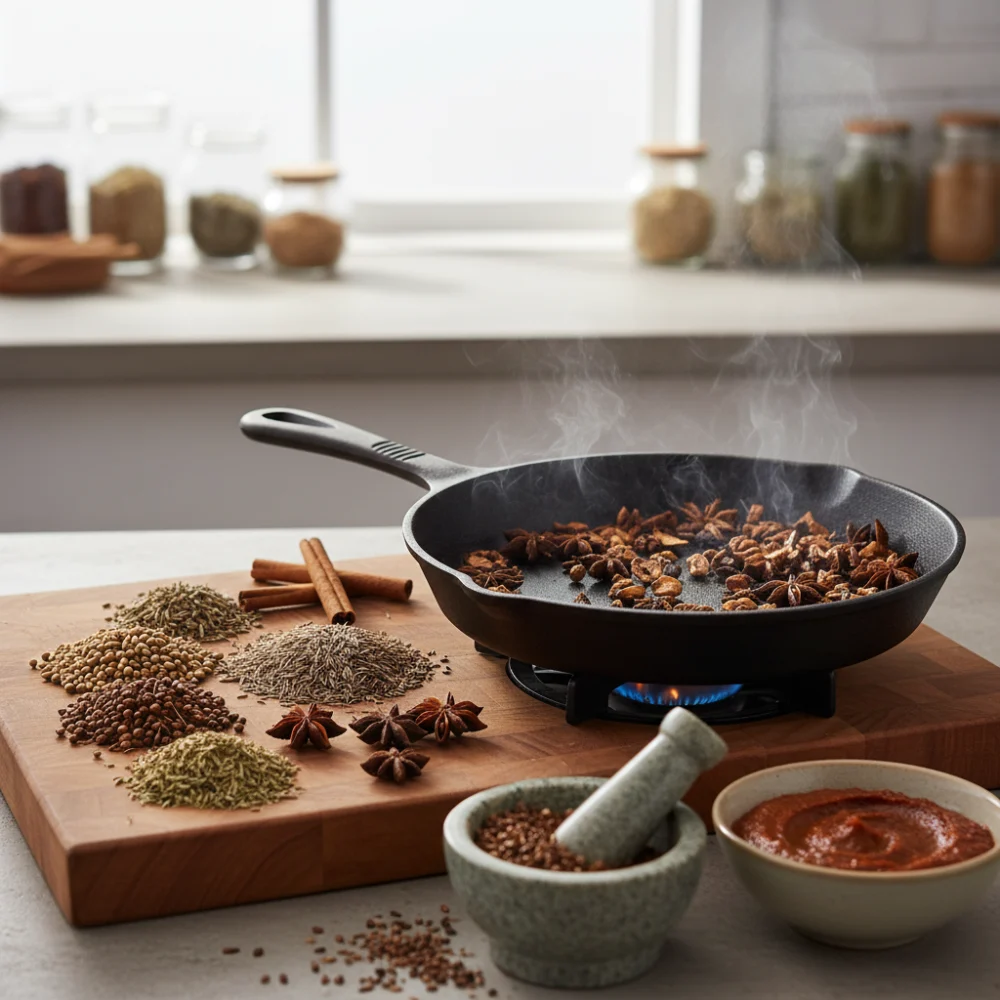
Begin by choosing high-quality, fresh whole spices. Ensure they are free from dust or debris. Common candidates for toasting include coriander seeds, cumin seeds, peppercorns, cardamom pods, and cinnamon sticks. Do not mix spices of vastly different sizes in the same batch, as smaller seeds like mustard will burn before larger ones like star anise are properly heated.
Step 2: Preheating the Skillet
Place your heavy-bottomed skillet over medium-low heat. It is crucial to use a dry pan; do not add oil or butter at this stage, as the goal is to toast the spices, not fry them. Allow the pan to heat for about two minutes until it is warm but not smoking.
Step 3: The Toasting Process
Add the whole spices to the pan in a single layer. Constantly move the spices by shaking the pan or stirring with a wooden spoon to prevent localized burning. Pay close attention to the sensory cues:
- Aroma: You will notice a sudden, intense fragrance filling the kitchen.
- Color: The spices will darken slightly, turning a golden or deep brown.
- Sound: Some spices, like mustard or cumin, may begin to crackle or pop.
This process usually takes between 2 to 5 minutes.
Step 4: Cooling and Grinding
Once the spices are fragrant and slightly darkened, immediately remove them from the hot pan and transfer them to a cool plate or bowl. Leaving them in the hot skillet will cause them to continue cooking and eventually burn. Once they have cooled to room temperature, grind them using a mortar and pestle or an electric spice grinder. Grinding them while hot can result in a gummy paste due to the released oils.
Conclusion: Elevating Your Culinary Creations
By taking the extra few minutes to toast your spices, you bridge the gap between amateur and professional cooking. This simple step unlocks a depth of flavor that pre-ground spices simply cannot match. Whether you are preparing a complex curry or a simple dry rub, the toasted profile provides a robust foundation that enhances every other ingredient in the dish.

Related Posts