
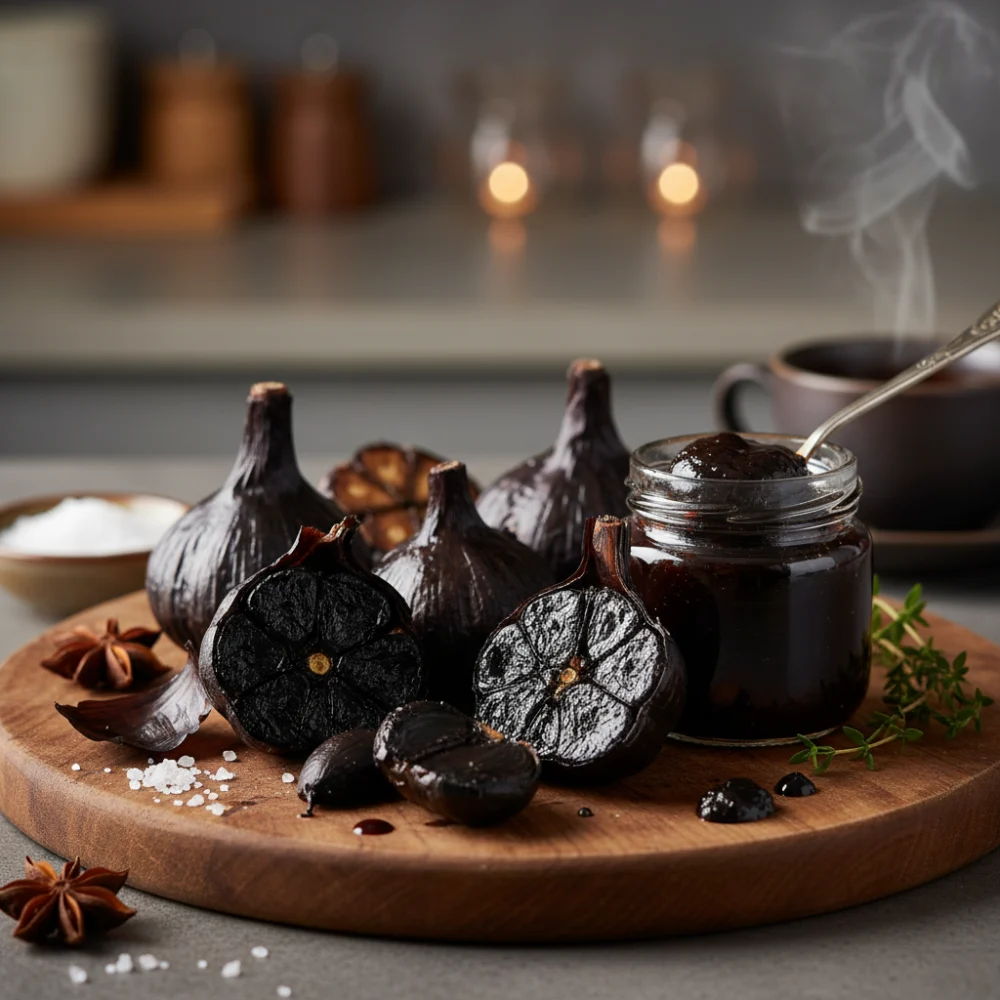
Black garlic is not a specific variety of garlic but rather the result of a month-long aging process under controlled heat and humidity. This transformation turns white cloves into jet-black, soft, and jelly-like gems. Understanding its flavor profile—often described as a mix of balsamic vinegar, molasses, and tamarind—is essential for any gourmet cook looking to add depth to their dishes.
To explore and utilize black garlic effectively, you will need a few essentials: High-quality fermented black garlic bulbs, a sharp paring knife, a mortar and pestle for mashing, and base ingredients like olive oil, butter, or balsamic vinegar to carry the flavor into your cooking.
Identifying the Maillard Reaction
The first step in understanding the flavor is recognizing that black garlic is not technically fermented but aged through the Maillard reaction. This chemical process occurs when amino acids and reducing sugars are exposed to low heat over several weeks. Unlike raw garlic, which is pungent and sharp, this process mellows the sulfur compounds, resulting in a deep, caramelized sweetness that serves as the foundation of its profile.
Evaluating the Texture and Aroma
Before tasting, observe the physical transformation. The cloves should be soft, almost like a dried date or a gummy candy. The aroma is no longer acrid; instead, it should smell earthy and slightly fruity.
- Softness: Indicates a successful aging process and ease of incorporation.
- Earthy Scent: Signals the development of complex umami notes.
This tactile and olfactory evaluation helps you predict how the garlic will dissolve into sauces or spreads.
Tasting the Five Flavor Profiles
When you taste black garlic, look for five distinct layers of flavor. First, you will notice a tangy acidity similar to aged balsamic. Second, a molasses-like sweetness follows. Third, there is a rich umami depth that mimics mushrooms or soy sauce. Fourth, subtle hints of licorice or anise may appear. Finally, the lingering finish is mild and savory, completely lacking the garlic breath associated with raw cloves.
Integrating the Flavor into Recipes
To maximize the fermented flavor, use black garlic as a flavor enhancer rather than a primary aromatic. You can mash it into a paste and whisk it into vinaigrettes, or fold it into softened butter for a steak topping. Because the flavor is delicate yet dense, it pairs exceptionally well with creamy cheeses, roasted meats, and even dark chocolate in experimental desserts.
Mastering the flavor of black garlic requires patience and a keen palate. By recognizing the chemical changes and experimenting with its unique sweet-savory balance, you can elevate your culinary creations to a professional level. It is a versatile ingredient that bridges the gap between savory and sweet, making it a staple for modern gastronomy.

Related Posts