
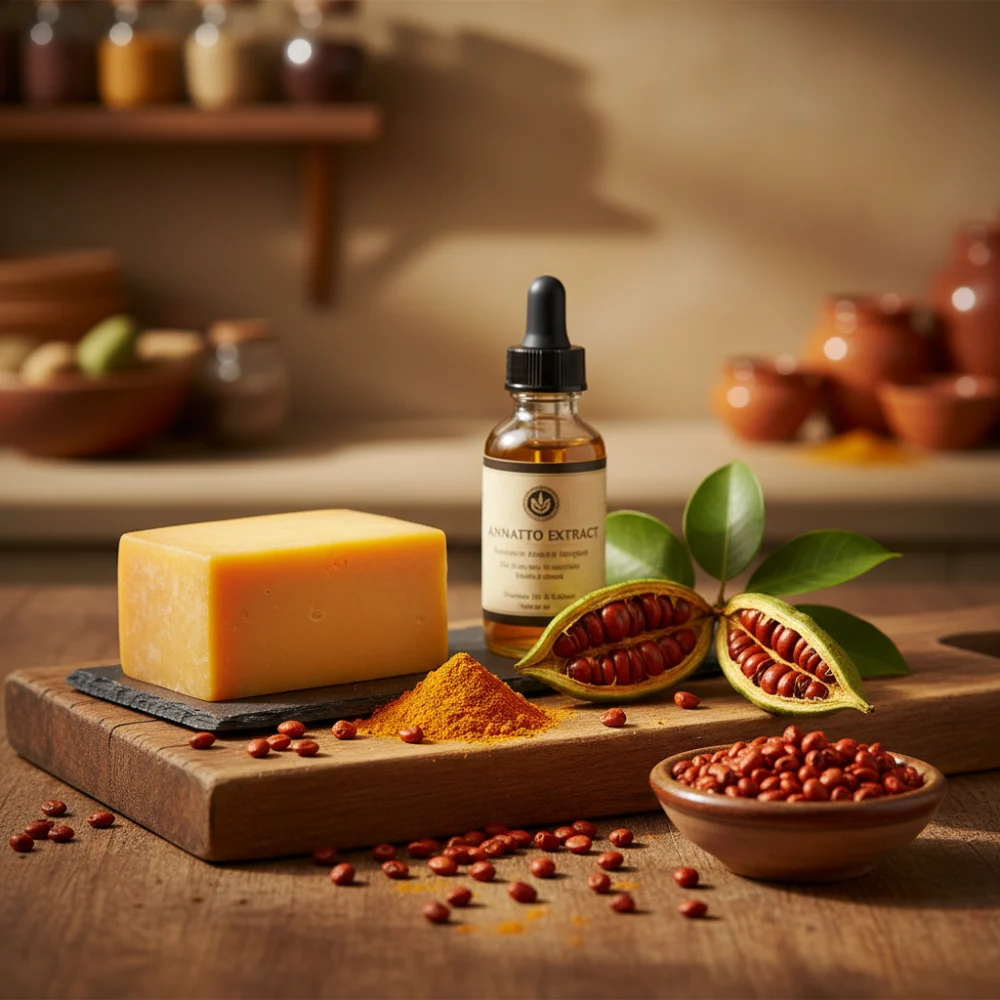
Have you ever wondered why Cheddar cheese is orange or why certain Latin American stews have a distinct, vibrant red hue? The answer lies in a small, heart-shaped fruit from the achiote tree (Bixa orellana), native to the tropical regions of the Americas. Inside this fruit are bright red seeds known as annatto. While it is globally famous for being the natural food coloring behind yellow cheese and butter, annatto is a complex spice with a long history and a unique flavor profile. It has been used for centuries by Mayans and Aztecs not only for cooking but also for cosmetics, earning the achiote the nickname ‘the lipstick tree.’
Using annatto in your kitchen allows you to tap into earthy, peppery flavors and brilliant natural colors without artificial additives. Whether you want to make authentic Mexican Cochinita Pibil or simply add a golden glow to your rice, mastering this spice is a culinary game-changer. This guide will walk you through what annatto is, what you need to use it, and how to prepare it effectively.
Requirements for Using Annatto
To start experimenting with annatto, you will need to acquire the spice in one of its various forms and have a few basic kitchen tools ready. Here is what you will need:
- Annatto Seeds (Achiote): The whole seeds offer the longest shelf life and are best for infusing oils.
- Annatto Powder: Ground seeds, useful for spice rubs and quick coloring.
- Achiote Paste: A pre-made block of ground annatto mixed with vinegar, garlic, and other spices.
- Neutral Oil: Vegetable, canola, or corn oil is required for making achiote oil.
- Mortar and Pestle or Spice Grinder: Essential if you are starting with whole seeds.
- Fine Mesh Strainer: Used to remove seeds after infusing oil.
Step 1: Understanding the Flavor Profile
Before cooking, it is important to understand what annatto actually tastes like. Many people assume it is flavorless because it is often used strictly as a colorant in industrial food production (like cheese). However, in sufficient quantities, annatto has a distinct taste. It is described as earthy, musk-like, slightly peppery, and sweet with a hint of nutmeg. When using it, you are adding a subtle depth of flavor that pairs exceptionally well with citrus, cumin, and coriander.
Step 2: Making Annatto Oil (Achiote Oil)
The most versatile way to use annatto is by infusing it into oil. This allows you to transfer the brilliant orange color and subtle flavor to rice, soups, and sautéed vegetables without the gritty texture of the seeds.
- Heat one cup of neutral oil in a small saucepan over medium heat.
- Add about two tablespoons of whole annatto seeds.
- Let the oil heat gently until small bubbles form around the seeds. Do not let the oil smoke or the seeds turn black, as this will make the oil bitter.
- Once the oil turns a deep, vibrant red-orange, remove it from the heat and let it cool.
- Strain the seeds out using a mesh strainer and store the oil in a glass jar. It is now ready to color your dishes.
Step 3: Creating and Using Achiote Paste
In Mexican and Caribbean cuisine, annatto is often used in the form of a paste known as recado rojo. You can buy this pre-made or make your own by grinding annatto seeds with oregano, cumin, cloves, cinnamon, black pepper, garlic, and vinegar. To use the paste:
- Take a small block of the paste.
- Dissolve it in a liquid, such as bitter orange juice (Naranja Agria), lime juice, or vinegar.
- Use this liquid mixture as a marinade for meats, particularly pork and chicken. This is the foundation of the famous dish Cochinita Pibil.
Step 4: Using Annatto as a Natural Colorant
If your goal is purely aesthetic, such as giving a yellow tint to rice or homemade cheese, annatto is a safe, natural alternative to yellow dye No. 5 or 6. Because the pigment (bixin) is soluble in fat, it works best when introduced to the fatty components of a recipe.
For homemade cheese making, dilute a small amount of annatto liquid extract or oil into the milk before adding rennet. For rice, simply stir a teaspoon of your homemade annatto oil into the pot before adding the water. The rice will cook into a beautiful golden-yellow color, often referred to as ‘yellow rice’ in Spanish cuisine.
Step 5: Storage and Handling Precautions
Annatto is incredibly potent as a dye. It was used by indigenous tribes for body paint for a reason—it stains everything it touches. When handling achiote paste or oil, be careful with porous surfaces, plastic containers, and clothing. It is best to use glass or metal bowls when mixing marinades. Store whole seeds in an airtight container in a cool, dark place for up to three years. Ground powder and pastes lose their potency faster and should be used within a year.
In conclusion, annatto is much more than just the reason your cheddar is orange. It is a historical, flavorful spice that serves as a cornerstone of Latin American and Caribbean cooking. By learning how to infuse it into oils or dissolve it into marinades, you can bring a vibrant visual appeal and an earthy complexity to your culinary creations.

Related Posts