
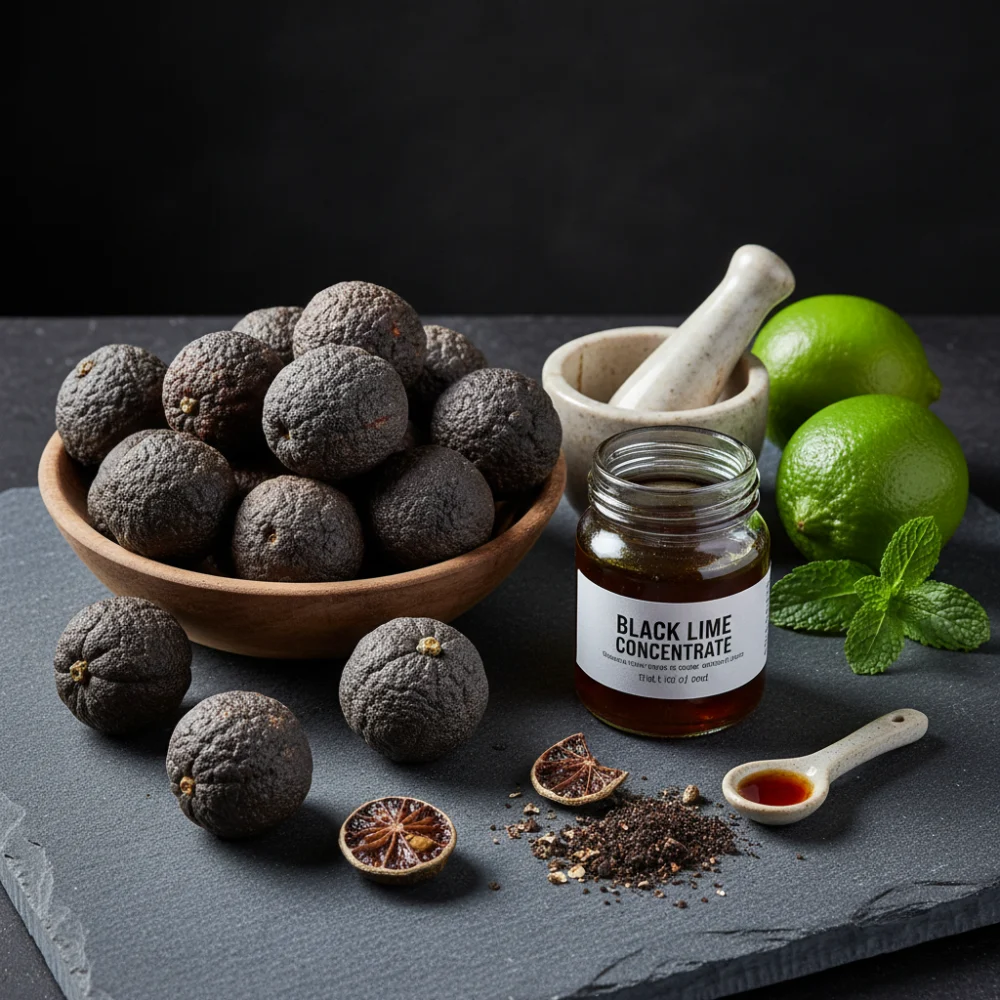
Introduction to the Essence of Black Lime
Black lime, often referred to as loomi or noomi basra, is a staple ingredient in Middle Eastern cuisine, particularly in Iranian, Iraqi, and Omani dishes. Despite its charred appearance, black lime is not burnt; it is a fresh lime that has been boiled in salt water and left to dry in the sun until it loses its moisture and turns dark brown or black. This process transforms the fruit into a hard, lightweight spice with a concentrated, complex flavor profile that is simultaneously sour, musky, and earthy.
Requirements for Working with Black Lime
To effectively use black lime in your kitchen, you will need the following items:
- Whole dried black limes: Available at specialty Middle Eastern grocers or online.
- A heavy-duty mortar and pestle: For crushing the limes into smaller pieces.
- Electric spice grinder: If you prefer a fine powder for rubs.
- Airtight storage container: To preserve the volatile aromatic oils.
- Kitchen towel: To hold the lime while cracking it to prevent slipping.
Step 1: Selecting and Inspecting the Limes
When purchasing black limes, look for fruits that feel light and hollow. They should be completely dry and hard to the touch. The color can range from a deep tan to a charcoal black. Ensure there is no visible mold and that the citrus aroma is pungent even through the skin. High-quality black limes will have a distinct fermented scent that hints at their intensive flavor potential.
Step 2: Preparing the Limes for Infusion
If you intend to use the black lime in a stew or soup, you must first prepare it to release its juices. Use a skewer or the tip of a knife to pierce the hard outer shell several times. This allows the cooking liquid to flow through the lime, extracting the sour and fermented notes without the fruit falling apart. Alternatively, you can crack the lime into large chunks using a mortar and pestle, removing any seeds if you prefer a smoother texture in your final dish.
Step 3: Creating a Fine Black Lime Powder
For spice rubs or seasoning roasted vegetables, grinding the lime into a powder is the best approach. Break the dried limes into small pieces and place them in a spice grinder. Pulse until you achieve a fine, sand-like consistency. This powder provides a concentrated burst of acidity and a unique smokiness that cannot be replicated by fresh lime juice or sumac. Store this powder in a cool, dark place to maintain its potency.
Step 4: Incorporating Black Lime into Recipes
To maximize the flavor profile, add whole pierced limes early in the simmering process of tagines, stews, or rice dishes like Kabsa. The intensive flavor develops over time, mellowing the harsh acidity into a sophisticated, savory tang. If using the powder, sprinkle it over grilled fish, chicken, or even salads just before serving. The fermented notes pair exceptionally well with legumes, such as lentils and chickpeas, adding depth to vegetarian preparations.
Understanding the Intensive Flavor Profile
The flavor of black lime is multi-dimensional. Unlike fresh citrus, which is bright and sharp, black lime offers a fermented acidity. It carries undertones of wood smoke, musk, and a slight bitterness that balances rich, fatty meats. Because the drying process concentrates the sugars and acids, a small amount of black lime goes a long way in transforming the overall taste profile of a dish from simple to professional-grade.
Conclusion
Mastering the use of black lime allows you to tap into centuries of culinary tradition. By understanding how to select, prepare, and grind this unique spice, you can introduce an intensive, complex acidity to your cooking that fresh citrus simply cannot provide. Whether infused in a slow-cooked stew or dusted over a grilled fillet, black lime is an essential tool for any chef looking to explore deep, fermented flavor profiles.

Related Posts