
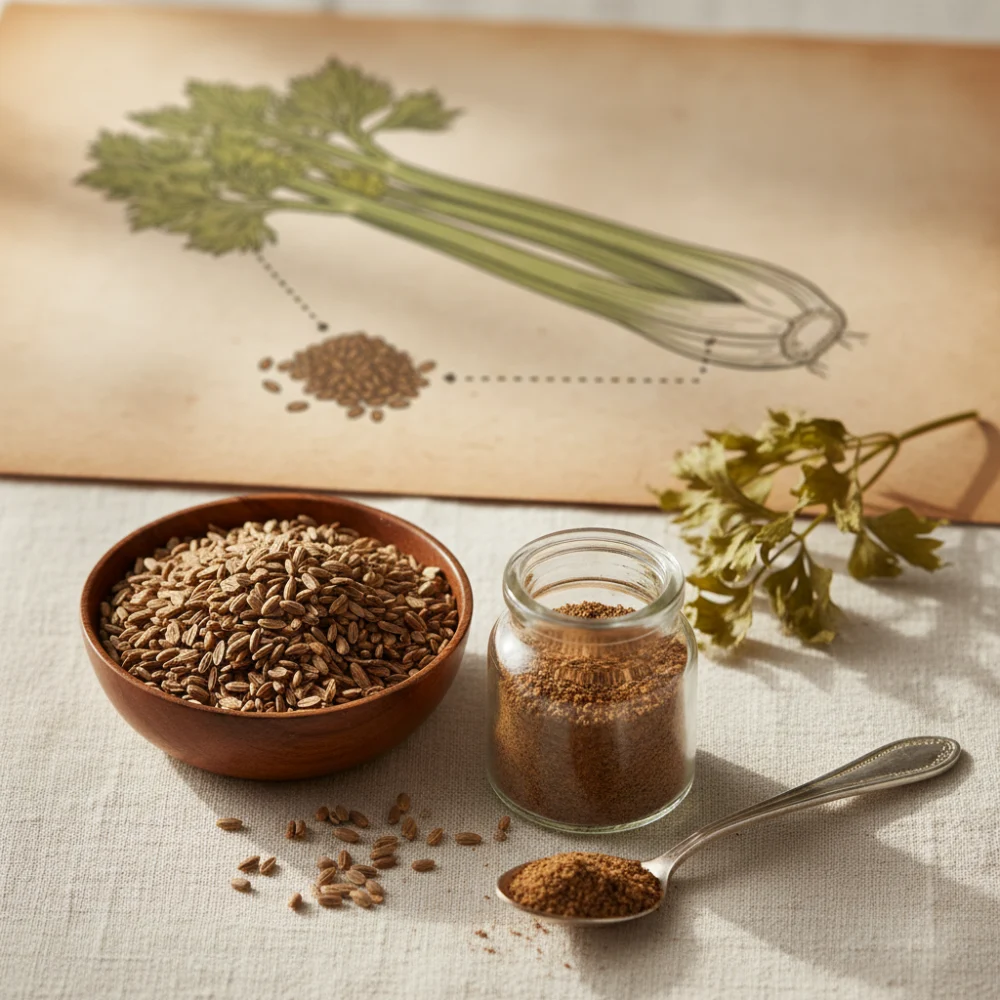
Celery seed is a spice that often sits in the back of the pantry, utilized only when making pickles or a specific coleslaw recipe. However, this tiny, brownish-green seed is a powerhouse of flavor that offers the essence of celery without the fibrous texture or high water content of the stalk. Derived from the seeds of a wild celery plant known as smallage (Apium graveolens), celery seed is much more intense than the vegetable you buy in the produce section. It possesses an earthy, grassy, and slightly bitter profile that can elevate savory dishes when used correctly.
Step 1: Understanding the Difference Between Seed and Stalk
Before using celery seed, it is crucial to understand its concentration. The flavor of the seed is significantly stronger than fresh celery. While a cup of chopped celery provides a mild, refreshing crunch, a single teaspoon of celery seed delivers a concentrated burst of earthy warmth. This makes it an excellent ingredient for dishes where you want the flavor of celery but do not want the added moisture or texture, such as in smooth sauces, dry rubs, or breads.
Step 2: Choosing Between Whole and Ground Seeds
You will generally find celery seed in two forms: whole and ground. Whole seeds are tiny and slightly crescent-shaped. They retain their volatile oils longer and provide a slight textural pop. These are ideal for pickling, brines, and rustic spice rubs. Ground celery seed is a fine powder that blends seamlessly into liquids. Use ground seed for smooth sauces, soups, or Bloody Mary mixes where you want the flavor to disperse evenly without visible specks.
Step 3: Tempering the Flavor with Heat
Because celery seed can be quite bitter and astringent in its raw state, lightly toasting the whole seeds can dramatically improve their flavor profile. To do this, place the seeds in a dry skillet over medium-low heat. Shake the pan constantly for one to two minutes until the seeds become fragrant and darken slightly. This process releases the essential oils and mellows the harsh bitterness, making the spice nuttier and more complex.
Step 4: Incorporating into Cold Salads and Slaws
The most classic application for celery seed is in cold, creamy salads. To use it effectively here, mix the seeds directly into the dressing rather than sprinkling them on top of the vegetables. Whisking the seeds into mayonnaise, vinegar, or yogurt allows the flavor to permeate the fat, distributing that savory celery taste throughout potato salad, egg salad, or coleslaw. Start with a half-teaspoon for a standard family-sized bowl and adjust to taste.
Step 5: Creating Savory Dry Rubs
Celery seed is a secret weapon for grilled meats. It pairs exceptionally well with salt, onion powder, and paprika. To make a simple rub for pork or chicken, combine one tablespoon of kosher salt with one teaspoon of ground celery seed and one teaspoon of black pepper. The earthy notes of the celery seed cut through the richness of the meat, providing a savory depth that salt alone cannot achieve.
In conclusion, celery seed is far more than just a pickling spice. It is a concentrated source of savory flavor that allows cooks to impart the taste of celery into dishes where the vegetable itself would be inappropriate. By understanding the difference between whole and ground varieties and learning to temper the bitterness through toasting, you can unlock a versatile ingredient that adds depth to everything from summer salads to winter roasts.

Related Posts