
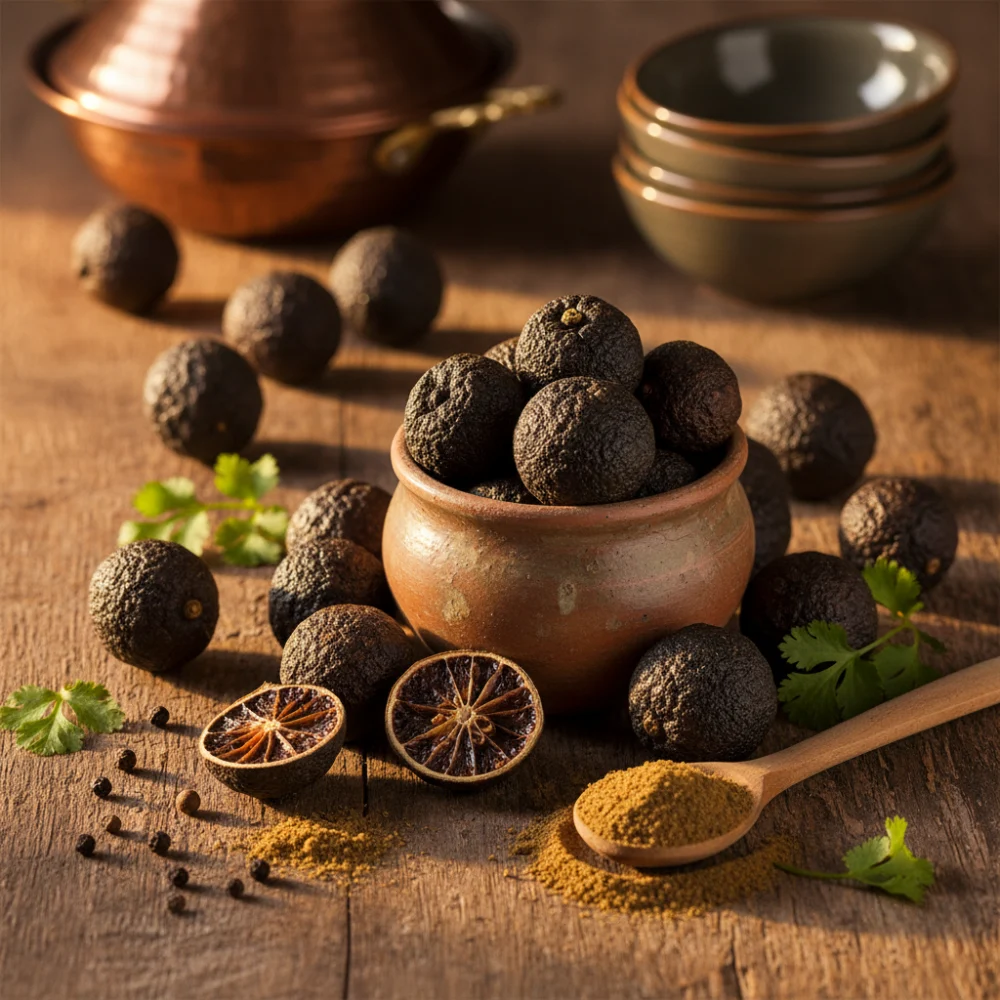
Dried lime, also known as Loomi or Limoo Amani, is a foundational ingredient in Persian and Middle Eastern culinary traditions. These are not simply dehydrated citrus slices; they are whole limes that have been boiled in brine and sun-dried until they lose their moisture and transform into hard, lightweight globes. The result is a flavor profile that is intensely sour, musky, and slightly fermented, offering a depth that fresh citrus cannot provide.
Step 1: Selecting the Right Variety
When purchasing dried limes, you will encounter two primary types: tan and black. The tan limes are dried for a shorter period and retain a more floral, bright acidity. The black limes, which are the most common in Persian cooking, have been fermented longer, resulting in a dark, smoky, and complex flavor. Ensure the limes are firm, dry, and free of mold before use. High-quality Loomi should feel light and sound hollow when tapped.
Step 2: Preparing Whole Limes for Stews
To use whole dried limes in liquid-based dishes like Ghormeh Sabzi or Khoresht Gheymeh, you must first prepare them to release their aromatic oils. Use a skewer or a small knife to pierce two or three holes into the skin of each lime. This allows the stewing liquid to circulate through the interior of the fruit. Add them to the pot during the last thirty to forty minutes of cooking to ensure they soften and infuse the broth without becoming overly bitter.
Step 3: Processing into Powder
If your recipe calls for a spice rub or a seasoning for rice, you will need to grind the limes. Start by breaking the dried limes apart with a heavy object or a mortar and pestle. It is crucial to remove and discard the seeds, as they carry an intense bitterness that can overpower the dish. Once the seeds are removed, place the dark flesh and brittle skins into a spice grinder. Pulse until you achieve a fine, dark powder that can be used to season grilled meats or seafood.
Step 4: Incorporating and Balancing Flavors
Loomi is powerful, so it should be integrated thoughtfully. When using the powder, start with a small amount—usually half a teaspoon—and adjust to taste. If you are using whole limes in a stew, you can gently press them against the side of the pot with a spoon toward the end of the cooking process to release a final burst of concentrated juice. The earthy sourness of Loomi pairs exceptionally well with fatty meats, legumes, and aromatic herbs like parsley and cilantro.
In conclusion, dried lime is an essential pantry staple for anyone looking to explore the authentic flavors of the Middle East. Whether used whole to provide a slow-release tang or ground into a potent spice, Loomi provides a sophisticated acidity that defines the soul of Persian cooking. By following these steps, you can successfully harness its unique properties to elevate your home-cooked meals.

Related Posts