
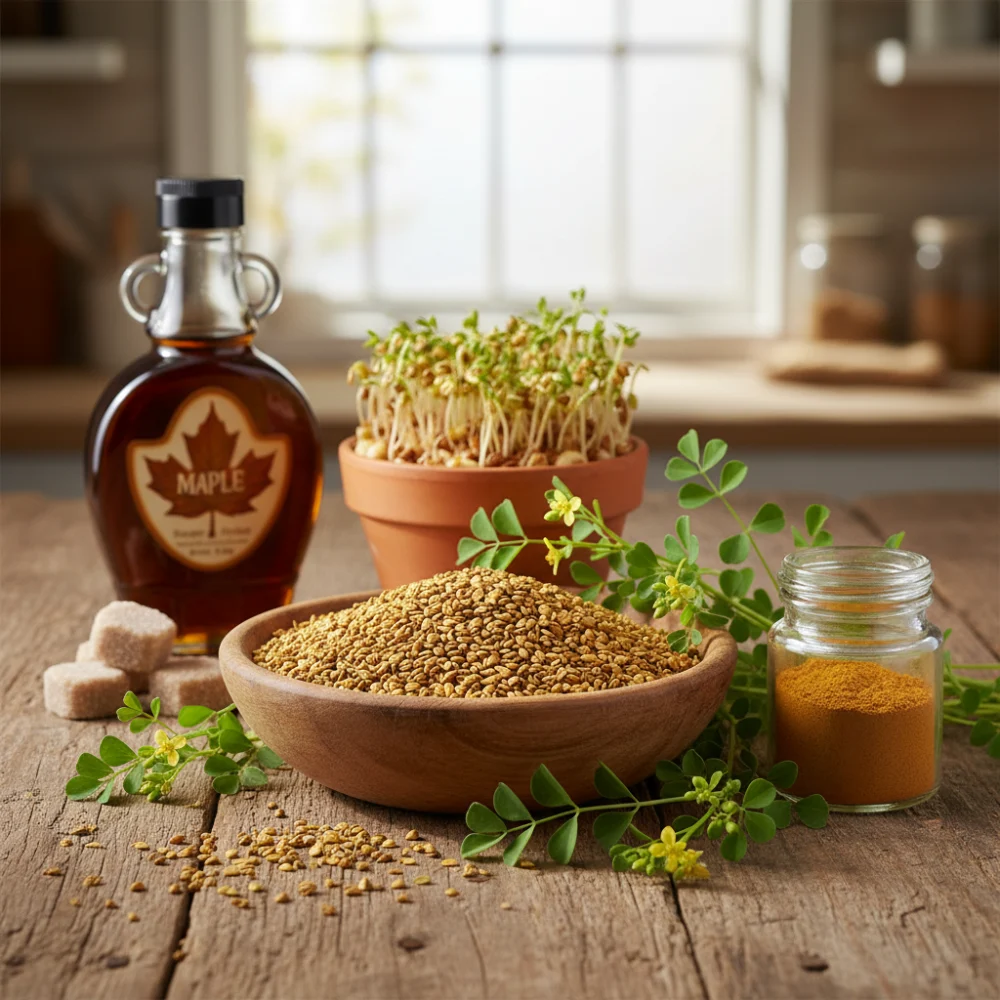
Fenugreek, scientifically known as Trigonella foenum-graecum, is an annual plant in the family Fabaceae, which is the same family as soy and beans. Native to the Mediterranean region, southern Europe, and western Asia, it has been used for thousands of years in alternative medicine and culinary traditions, particularly in Indian, North African, and Middle Eastern cuisines. What makes fenugreek truly unique is its dual utility: both its seeds and its leaves are edible, offering different textures and flavor profiles. Perhaps its most surprising characteristic is its potent aroma, which bears a striking resemblance to maple syrup due to a chemical compound called sotolon.
Prerequisites for Exploring Fenugreek
To fully explore the potential of this herb, you will need to gather a few essential items. Having these on hand will allow you to experiment with the different forms of the plant.
- Fenugreek Seeds: These are hard, stony, yellowish-brown seeds that look like tiny pebbles.
- Fresh Fenugreek Leaves (Methi): These look somewhat like clover or spinach and are often found in Asian grocery stores.
- Dried Fenugreek Leaves (Kasuri Methi): These are crumbly, dried leaves used primarily for finishing dishes.
- A Spice Grinder or Mortar and Pestle: Essential for breaking down the hard seeds.
- A Skillet: For dry roasting the spices to release essential oils.
Step 1: Distinguishing Between the Forms
The first step in understanding fenugreek is recognizing that the plant yields two distinct ingredients. The seeds are used as a spice. They are cuboid-shaped, hard, and have a bitter taste that mellows upon cooking. The leaves, known as ‘Methi’ in India, are used as an herb. Fresh leaves are treated like spinach and cooked as a vegetable, while dried leaves are used as a flavor enhancer. Understanding this distinction is crucial because they cannot always be substituted for one another in recipes.
Step 2: Mastering the Flavor Profile
Before cooking, you must understand the flavor notes. Raw fenugreek seeds are incredibly bitter. However, when roasted or cooked, that bitterness transforms into a complex, nutty, and sweet flavor with a heavy maple undertone. In fact, fenugreek extract is often used commercially to create artificial maple syrup flavoring. To test this, take a pinch of dried leaves (Kasuri Methi) and crush them between your fingers; the release of the maple scent will be immediate and unmistakable.
Step 3: Preparing Fenugreek Seeds for Cooking
To use the seeds without overpowering your dish with bitterness, you must prepare them correctly. Heat a dry skillet over medium heat and add the seeds. Toast them gently for one to two minutes until they turn a shade darker and become aromatic. Be very careful not to burn them, as burnt fenugreek becomes acrid and inedible. Once roasted, you can grind them into a powder for spice blends like curry powder or garam masala, or use them whole in hot oil (tempering) at the start of a dish.
Step 4: Utilizing Fresh and Dried Leaves
Using the leaves requires a different approach. If you have fresh leaves, pick the leaves off the tough stems, wash them thoroughly to remove grit, and chop them. They can be sautéed with potatoes, added to flatbread doughs, or stewed in lentils. For Kasuri Methi (dried leaves), the technique is to crush the dried leaves in your palm right before adding them to a dish. This is typically done at the very end of the cooking process, such as in a Butter Chicken or a rich vegetable curry, to impart a buttery, complex aroma.
Step 5: Understanding Health and Medicinal Uses
Beyond the kitchen, fenugreek is renowned for its health benefits. It is widely used to help control blood sugar levels in people with diabetes, as it may improve insulin function. Additionally, it is one of the most popular herbal galactagogues, used by breastfeeding mothers to increase milk supply. To utilize it for health, many people soak a teaspoon of seeds in water overnight and drink the water on an empty stomach the next morning.
Conclusion
Fenugreek is a powerhouse ingredient that bridges the gap between savory spice and sweet aromatic. By understanding how to manipulate its forms—roasting the seeds to reduce bitterness and crushing the dried leaves for fragrance—you can elevate simple dishes into complex culinary experiences. Whether you are making a traditional curry or looking for natural health supplements, fenugreek is an essential herb to have in your pantry.

Related Posts