
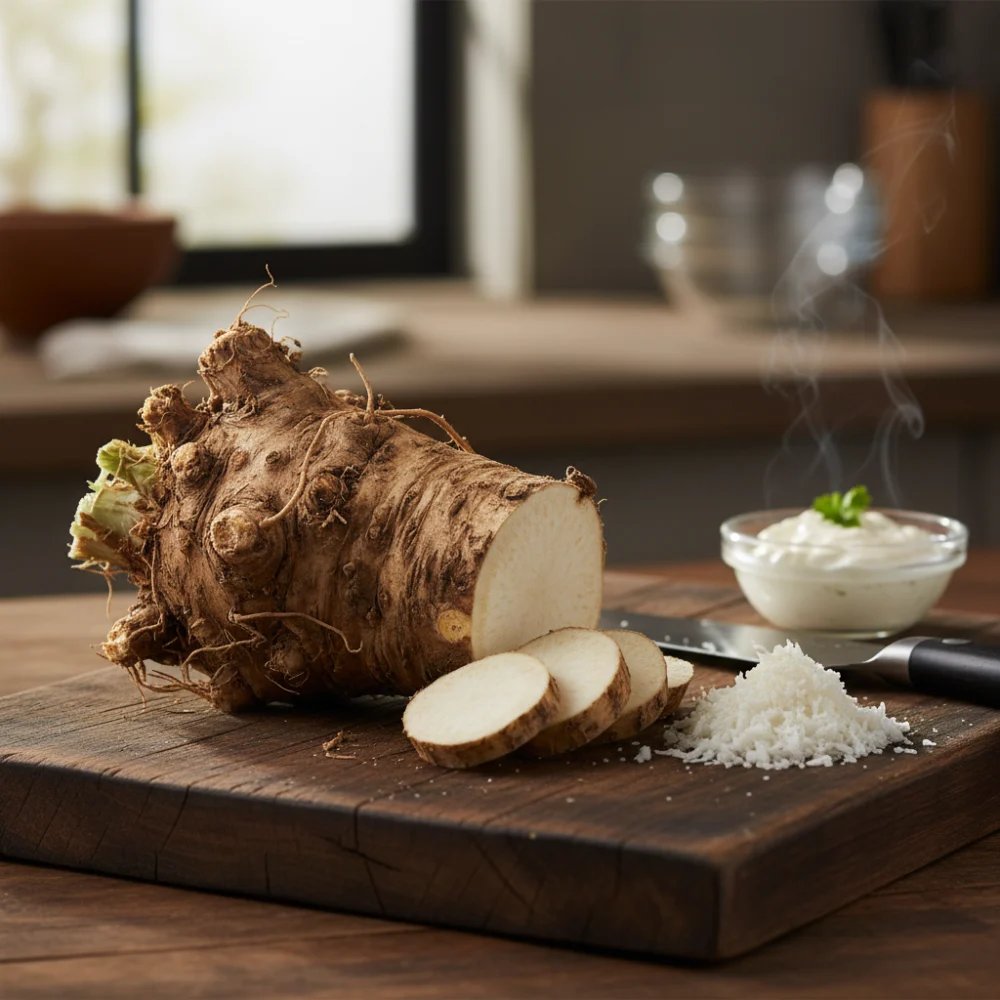
Horseradish, known scientifically as Armoracia rusticana, is a perennial plant of the Brassicaceae family, which also includes mustard, wasabi, broccoli, and cabbage. This root is famous for its intense, pungent heat that clears the sinuses rather than burning the tongue. Historically used for both medicinal and culinary purposes, horseradish remains a staple in various global cuisines, particularly in sauces for meats and seafood.
Requirements for Working with Fresh Horseradish
- Fresh horseradish root (firm and without soft spots)
- A vegetable peeler or sharp paring knife
- A fine grater or a food processor
- White vinegar or apple cider vinegar
- Salt for seasoning
- A well-ventilated workspace to handle the fumes
Step 1: Selecting and Storing the Root
To begin your journey with fresh horseradish, you must select a high-quality root. Look for pieces that are firm, heavy for their size, and free of mold or soft, shriveled sections. Once purchased, store the unwashed root in a plastic bag in the refrigerator vegetable drawer. It can stay fresh for several weeks, but for the most potent flavor, it is best used within seven to ten days.
Step 2: Peeling and Preparing
When you are ready to use the horseradish, wash the root thoroughly under cold running water to remove any dirt. Use a vegetable peeler to remove the tough, brown outer skin until the creamy white flesh is exposed. Only peel the portion you intend to use immediately, as the exposed flesh will begin to oxidize and lose its potency quickly when in contact with air.
Step 3: Grating and Releasing the Heat
The heat of horseradish is not present until the root cells are crushed. This action releases enzymes that create allyl isothiocyanate, the compound responsible for the pungent kick. You can use a fine hand grater for small amounts or a food processor for larger batches. Warning: The fumes can be extremely strong and irritating to the eyes and nose, so work in a ventilated area or keep your face away from the processor lid when opening it.
Step 4: Stabilizing the Flavor with Vinegar
Timing is critical when adding vinegar. If you want a milder flavor, add vinegar immediately after grating. If you prefer a very hot and pungent profile, wait three minutes before adding the vinegar. The vinegar stops the enzymatic reaction and preserves the heat level. Use about two to three tablespoons of white vinegar and a pinch of salt for every cup of grated horseradish.
Conclusion
Mastering the use of horseradish allows you to add a sophisticated, bold dimension to your culinary repertoire. Whether you are crafting a classic cocktail sauce, a creamy spread for roast beef, or a spicy addition to mashed potatoes, fresh horseradish offers a depth of flavor that bottled versions cannot match. By following these steps, you can safely harness the power of this remarkable root.

Related Posts