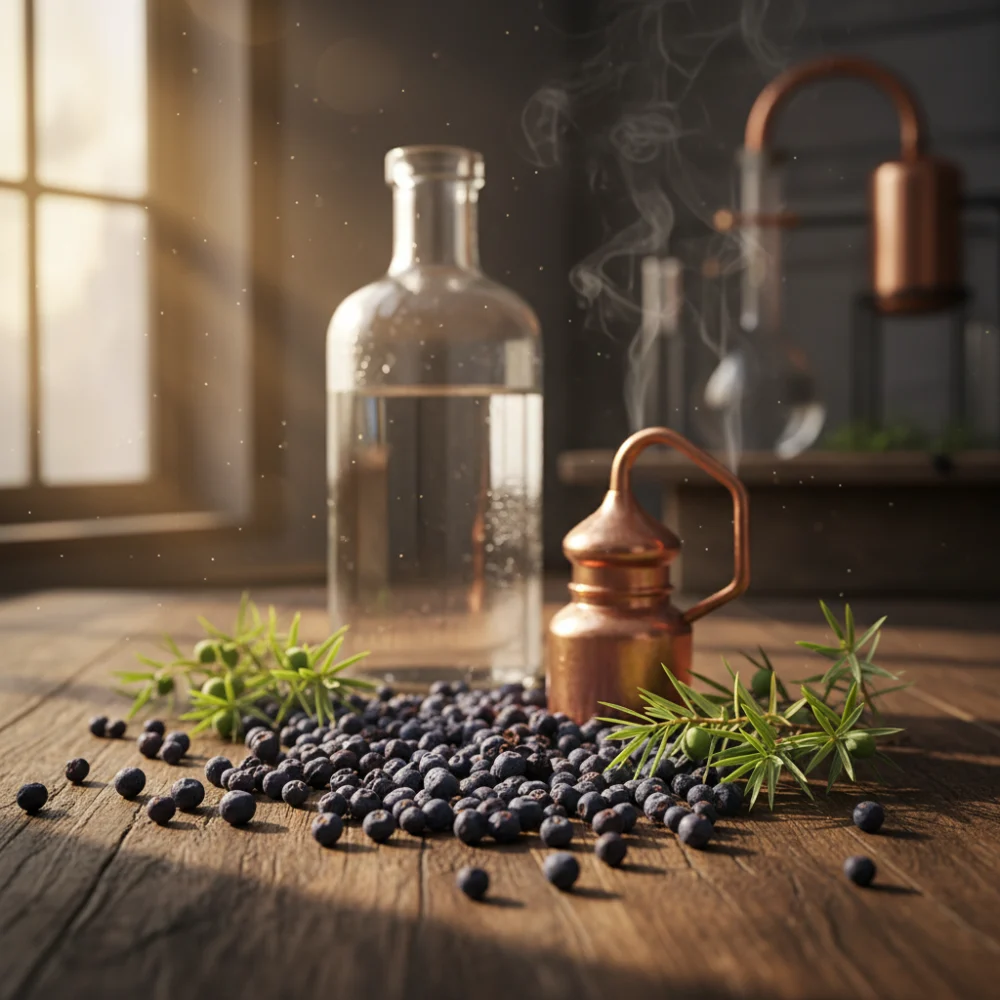
When you take a sip of a crisp martini or a refreshing gin and tonic, the immediate, pine-forward flavor that greets your palate is the work of a small, dark purple sphere: the juniper berry. Without this essential ingredient, gin would simply be vodka. While modern gins experiment with everything from cucumber to lemongrass, the juniper berry remains the beating heart of the spirit. Understanding this botanical is the key to appreciating the complexity of high-quality gin.
Many enthusiasts drink gin without knowing exactly what they are consuming. Is it a fruit? A seed? Where does it come from? This guide breaks down the nature of the juniper berry, explaining its biological origins, its complex flavor profile, and the specific role it plays in the distillation process. By the end of this article, you will understand why this humble botanical has captivated distillers for centuries.
Step 1: Identifying the Botanical Source
The first step to understanding juniper is to correct a common misconception: it is not actually a berry. The juniper berry is technically a female seed cone produced by the various species of junipers. It looks like a berry because its scales have merged and become fleshy, creating a smooth, round appearance. While there are many species of juniper, the one most commonly used in gin production is Juniperus communis.
These shrubs grow in the wild across the Northern Hemisphere, from North America to Europe and Asia. Unlike many crops that are farmed intensively, much of the juniper used in premium gin is harvested wild. The best berries are usually picked by hand to avoid damaging the plant, which contributes to the romantic and artisanal allure of the spirit.
Step 2: Analyzing the Flavor Profile
Why was juniper chosen as the primary flavoring for gin? The answer lies in its potent and complex chemical makeup. The berries contain essential oils, primarily alpha-pinene, which is responsible for the signature pine-like aroma. However, a high-quality juniper berry offers much more than just a forest-floor scent.
- Pine and Resin: The dominant note, providing a clean and fresh backbone.
- Citrus: Hints of lemon or lime zest are often present in the background.
- Peppercorn: A subtle spiciness or earthiness that adds depth.
- Floral: Some varieties, particularly those from the Mediterranean, offer sweet, floral undertones.
Step 3: Understanding the Legal Definition of Gin
Juniper is not just a flavoring preference; it is a legal requirement. In the United States and the European Union, for a distilled spirit to be labeled as gin, it must possess a predominant flavor of juniper. If you remove the juniper, you are left with a flavored vodka or a botanical spirit, but it is no longer gin.
This rule stems from the spirit’s history, dating back to Dutch Genever, which was used for medicinal purposes. The juniper was originally added to mask the harsh taste of primitive alcohol and to utilize the plant’s reputed health benefits, such as aiding digestion and kidney function.
Step 4: The Distillation Process
To transfer the flavor from the hard, waxy berry into the liquid spirit, distillers use specific extraction methods. You cannot simply drop berries into a bottle of vodka and expect high-quality gin. The berries are usually dried first, which concentrates their oils.
During distillation, the berries are either macerated (steeped) in the neutral spirit before boiling, or they are placed in a basket in the still’s neck (vapor infusion). As the alcohol vapor rises, it passes through the berries, stripping away the essential oils and carrying the flavors into the final distillate. This process ensures the oils are integrated smoothly, creating a cohesive spirit rather than a disjointed mixture.
Step 5: Selecting and Using Juniper at Home
If you are a home mixologist or an aspiring distiller, selecting the right juniper is crucial. When buying dried juniper berries, look for those that are plump, dark blue or purple, and slightly shiny. Avoid berries that are shriveled, brown, or dry, as they will have lost their essential oils.
To use them in cooking or simple infusions, you must break the skin. Gently crush the berries with a mortar and pestle or the flat side of a knife right before using them. This releases the aromatic oils. Beyond gin, they are excellent in heavy meat dishes, marinades for game, and even in sauerkraut, where their sharp flavor cuts through rich fats.
In conclusion, the juniper berry is a fascinating botanical masquerading as a fruit, serving as the defining character of one of the world’s most popular spirits. Its unique combination of pine, citrus, and spice notes allows it to stand up to tonic water and vermouth alike. The next time you enjoy a cocktail, take a moment to recognize the wild, hand-picked cone that made it possible.

Related Posts