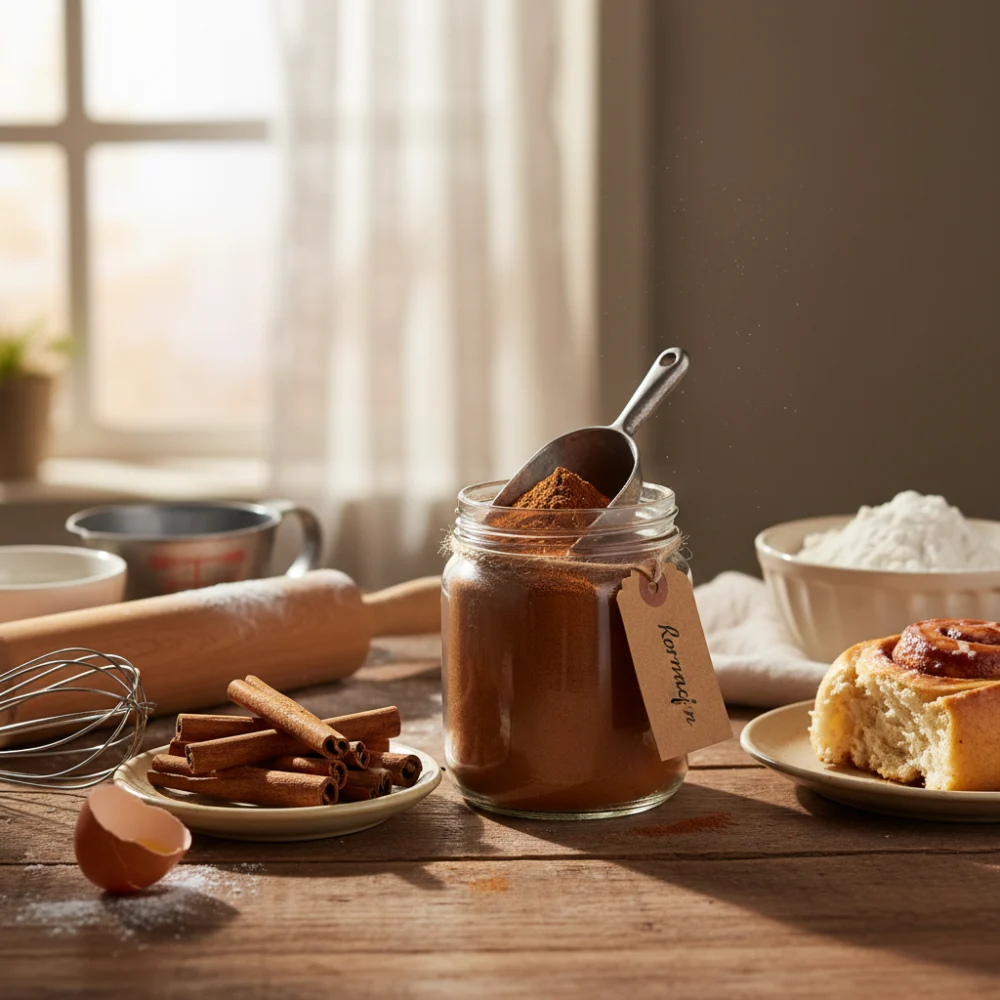
If you have ever enjoyed a classic cinnamon roll, a slice of apple pie, or a generic cinnamon-dusted donut, you have almost certainly tasted Korintje cinnamon. While the world of spices is vast, this specific variety, botanically known as Cinnamomum burmannii, accounts for the majority of cinnamon sold in the United States. Often referred to simply as Indonesian Cassia, it is revered by commercial bakeries and home cooks alike for its reliable, nostalgic flavor profile. Unlike its spicier or more floral cousins, Korintje offers a smooth, mellow finish that blends perfectly with flour and sugar.
Understanding exactly what this spice is and how to utilize it can elevate your baking from good to professional quality. While it is the most common variety, it is far from ordinary when sourced correctly. This guide will walk you through the origins, characteristics, and best uses of Korintje cinnamon, helping you understand why it remains the gold standard for bakers worldwide.
Step 1: Identifying the Origin and Botany
To truly understand Korintje cinnamon, you must first look to its source. It is grown primarily on the slopes of Mount Kerinci in Sumatra, Indonesia. The altitude and volcanic soil contribute significantly to the oil content and flavor density of the bark.
- Scientific Name: Cinnamomum burmannii.
- Harvest Method: Unlike Ceylon cinnamon, which is harvested as thin inner bark layers, Korintje is harvested in thick strips that curl into hard quills as they dry.
- Appearance: Look for a deep reddish-brown color. The sticks (quills) usually curl inward from both sides, resembling a scroll, and are much harder and woodier than Ceylon cinnamon.
Step 2: Recognizing the Flavor Profile
The primary reason Korintje is the baker’s favorite lies in its chemical composition. It has a high concentration of cinnamaldehyde, but it is balanced by a lack of eugenol (the compound that gives cloves their numbing bite). This results in a specific sensory experience:
- Sweetness: It has a natural, smooth sweetness that does not overpower sugar in recipes.
- Mellowness: It lacks the aggressive, tongue-burning heat found in Vietnamese (Saigon) cinnamon.
- Woody Notes: It possesses a distinct earthy, woody finish that grounds the sweetness of pastries.
Step 3: Distinguishing Korintje from Other Varieties
When selecting spices, it is crucial to differentiate Korintje from its main competitors to ensure you are getting the flavor you expect.
- Vs. Ceylon (True Cinnamon): Ceylon is tan, papery, and has delicate floral and citrus notes. It is often too subtle for heavy baking and is better suited for Mexican chocolate or light dustings.
- Vs. Saigon (Vietnamese Cassia): Saigon cinnamon is intensely spicy and sweet, often described as tasting like red-hot candies. While delicious, it can overwhelm subtle cookie recipes where Korintje provides a more balanced backdrop.
Step 4: Assessing Quality and Grading
Not all Korintje cinnamon is created equal. The spice is graded based on the oil content, which dictates the potency of the aroma and flavor. When buying, look for specific grade indicators if available:
- Grade A (2.75% Volatile Oil): This is the highest quality, sourced from the main trunk of mature trees. It provides the strongest flavor and is ideal for recipes where cinnamon is the star.
- Grade B and C: These have lower oil contents and are often harvested from branches rather than the trunk. They are cheaper and commonly found in generic supermarket brands.
Step 5: Mastering Culinary Applications
Once you have secured high-quality Korintje cinnamon, the final step is applying it correctly in the kitchen. Because of its durability and heat resistance, it is uniquely suited for specific tasks.
- High-Heat Baking: The flavor compounds in Korintje hold up well to high oven temperatures (350°F – 400°F), making it perfect for cookies, muffins, and breads.
- Fruit Pairings: Its mellow profile complements tart fruits like apples and rhubarb without competing with their acidity.
- Spice Blends: It is the ideal base for pumpkin pie spice or Chinese five-spice powder because it acts as a binding flavor for more aggressive spices like ginger and cloves.
In conclusion, Korintje cinnamon is the workhorse of the spice cabinet. Its familiarity, affordability, and smooth flavor profile make it the undisputed champion for traditional Western baking. By understanding its Indonesian roots and how it differs from the spicy Saigon or floral Ceylon varieties, you can make informed decisions that enhance the flavor of your culinary creations. Whether you are baking a holiday pie or simply dusting your morning latte, Korintje provides that classic, comforting warmth we all know and love.

Related Posts