Understanding the Cumin and Taco Connection
If you have ever opened a jar of ground cumin and immediately thought of taco night, you are not alone. This distinct olfactory association is rooted deeply in organic chemistry. While many people believe cumin smells like tacos, the reality is actually the reverse: tacos smell like cumin because it is the primary seasoning used in commercial taco spice blends and traditional Mexican recipes.
What You Need to Explore Cumin Chemistry
To follow this guide and understand the aromatic profile of cumin, you will need the following items:
- Whole cumin seeds for comparing raw versus toasted scents.
- Ground cumin to observe surface area oxidation.
- A dry skillet for heat application and Maillard reaction observation.
- A mortar and pestle to release volatile oils manually.
Step 1: Identify the Primary Compound – Cuminaldehyde
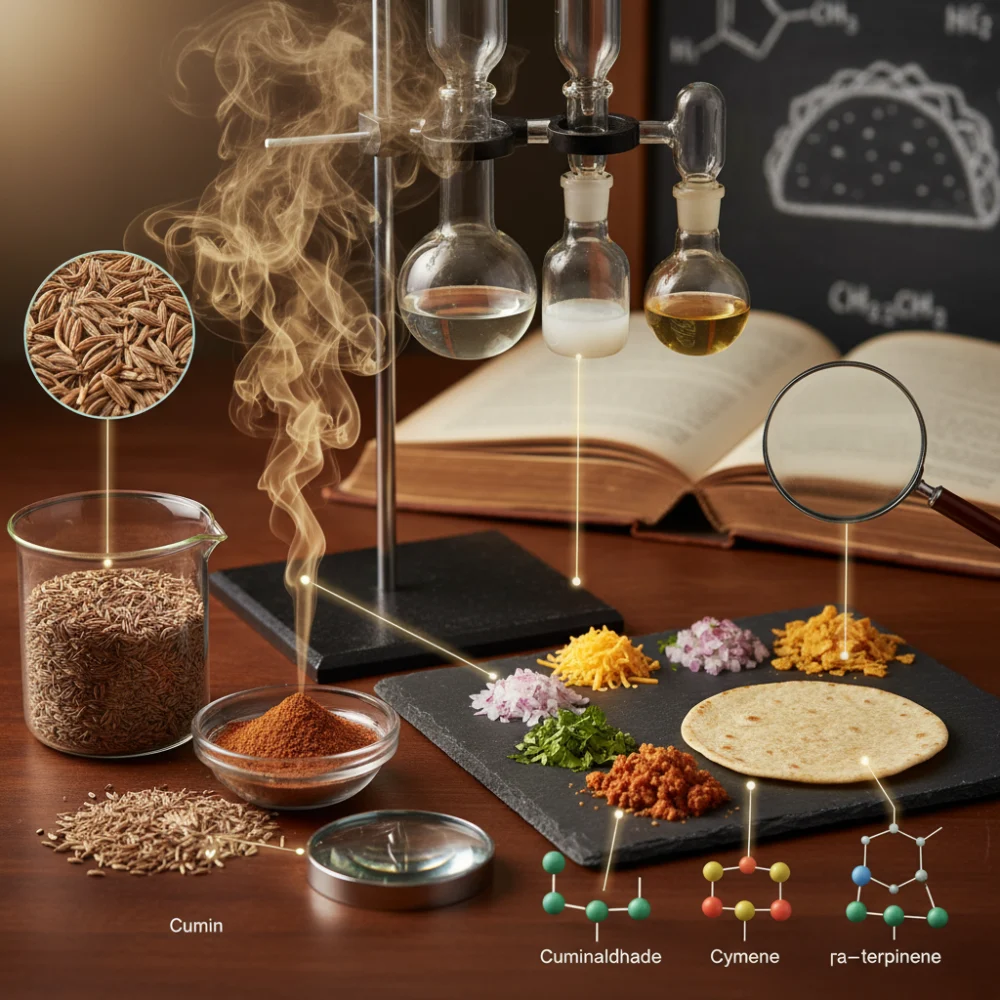
The first step in understanding the scent is identifying cuminaldehyde. This is the main component of cumin essential oil, making up a significant portion of its chemical profile. In its pure form, it provides that pungent, earthy, and slightly spicy aroma that forms the backbone of the taco scent profile. When you smell cumin, your olfactory receptors are primarily detecting this specific aldehyde, which is unique to the Cuminum cyminum plant.
Step 2: Analyze the Role of Pyrazines and Heat
When cumin seeds are toasted or cooked with meat, a chemical transformation occurs. Pyrazines are formed through the Maillard reaction. These compounds contribute nutty, toasted, and savory notes. In the context of a taco, the combination of cuminaldehyde from the spice and pyrazines from the browned protein creates the complex, mouth-watering taco smell we recognize. Without the heat, the scent remains floral and earthy; with heat, it becomes savory and taco-like.
Step 3: Recognize Secondary Terpenes and Cymene
Cumin contains other volatile compounds like cymene and various terpenes. These provide the citrusy, pine-like, and slightly medicinal undertones. To experience this, crush a whole cumin seed using a mortar and pestle and notice the bright, sharp notes that differ from the heavy, dusty scent of pre-ground powder. These lighter molecules are often lost in pre-packaged taco kits, which is why homemade blends smell more complex.
Step 4: Observe the Impact of Oxidation
Ground cumin loses its volatile oils quickly due to increased surface area exposure to oxygen. As it oxidizes, the fresher, herbal notes fade, leaving behind the heavier, more persistent earthy tones. This is why older ground cumin smells more musky or even sweaty to some people, which is a common characteristic of mass-produced taco seasoning packets that have sat on shelves for months.
Conclusion: The Science of Flavor
In summary, cumin smells like tacos because it is the dominant aromatic profile in the spice blends that define the dish. By understanding the interaction between cuminaldehyde, pyrazines, and terpenes, you can better appreciate how chemistry shapes our culinary experiences. Next time you cook, try toasting whole seeds to see how heat transforms these chemical bonds into the familiar, comforting scent of a Mexican feast.

Related Posts