The World Health Organization (WHO) and the Swiss Confederation have officially reaffirmed their robust commitment to international public health by renewing their strategic cooperation framework for the 2024–2028 period. The formal agreement, which solidifies more than a decade of pioneering institutional collaboration, was officially signed and sealed on March 4, 2025, during a high-level meeting at the Regional Office of the WHO in Copenhagen, Denmark.
This newly updated framework builds directly upon a unique historical precedent established more than a decade ago. Back in 2013, Switzerland made landmark institutional history by becoming the very first high-income country within the WHO European Region to pilot a dedicated, formal cooperation strategy with the global health body. What began as an experimental framework to streamline joint public health priorities, optimize resource allocation, and enhance technical cooperation has evolved over the years into a mature, highly effective partnership serving as a model for other developed nations.
Recognizing the rapidly shifting landscape of global health—particularly in the wake of emerging health emergencies, geopolitical shifts, and complex epidemiological challenges—WHO and Swiss authorities jointly decided in 2022 to comprehensively update, modernize, and renew the bilateral agreement. Following extensive strategic alignment and planning, the finalized strategy was formally adopted in early 2025, setting a clear, collaborative roadmap for the two entities through 2028.
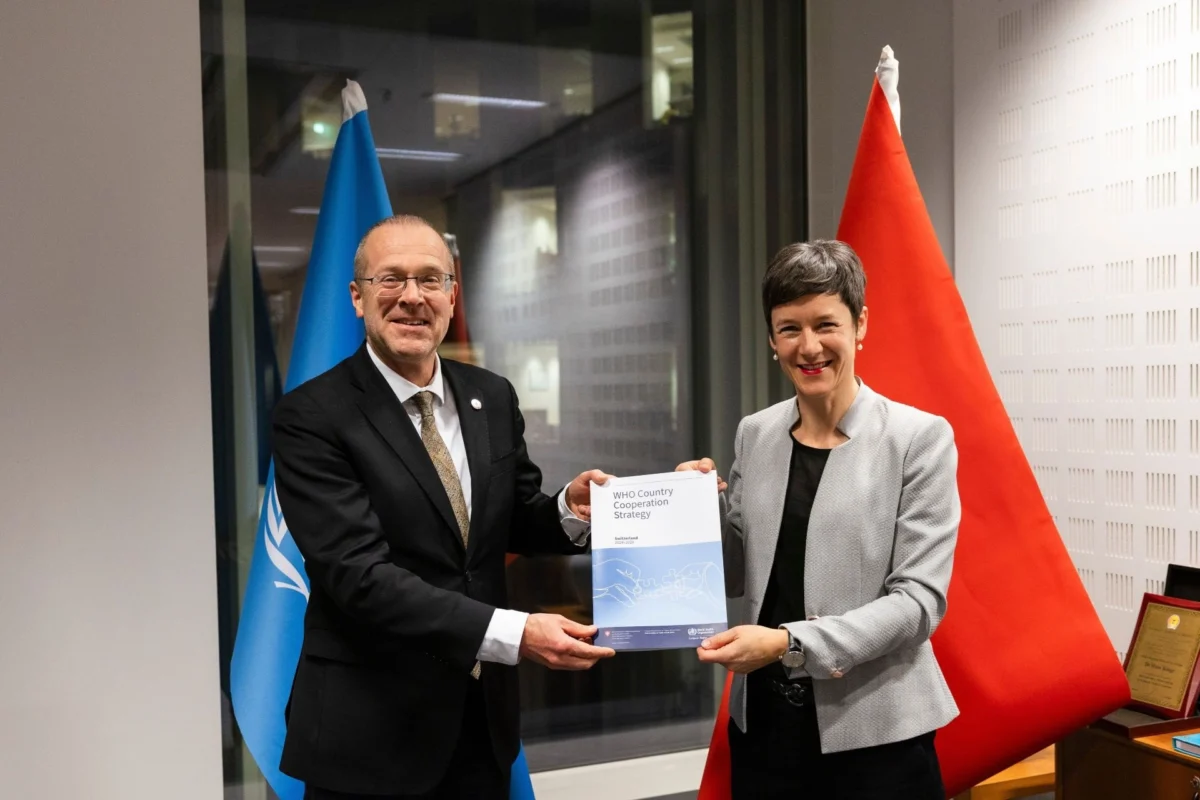
The official signing ceremony in Copenhagen brought together key leadership figures from both organizations to mark the milestone. Dr. Hans Kluge, WHO Regional Director for Europe, met with Barbara Schedler, Ambassador for Global Health at the Swiss Federal Office of Public Health, to cement the partnership and outline the immediate operational priorities for the renewed framework. During the gathering, Dr. Kluge and Ambassador Schedler underscored the vital importance of multilateral cooperation, solidarity, and sustained technical investment in tackling contemporary and future health threats across Europe and globally.

The newly minted WHO–Switzerland Country Cooperation Strategy for 2024–2028 outlines a series of shared priorities designed to strengthen health systems, improve health security, and address systemic inequalities in health outcomes. While Switzerland is widely recognized for its advanced domestic healthcare infrastructure, its partnership with the WHO extends far beyond national borders. As a prominent global hub for diplomacy, pharmaceutical innovation, and humanitarian action, Switzerland plays an outsized role in shaping international health policy and supporting operational responses in vulnerable regions.
This renewed bilateral strategy also aligns closely with broader cooperative efforts between Switzerland and the global health organization in specialized technical domains. Among the most notable recent expansions of this partnership is the collaboration surrounding the global BioHub system. The WHO-Switzerland partnership for the global BioHub system represents a critical cornerstone of modern pandemic preparedness. Designed to facilitate the rapid, safe, and transparent sharing of novel pathogens and clinical materials between laboratories worldwide, the BioHub system relies heavily on Swiss logistical expertise, institutional backing, and state-of-the-art infrastructure. By integrating the BioHub initiative with broader strategic frameworks like the 2024–2028 cooperation strategy, WHO and Switzerland are actively fortifying the global architecture required to detect, contain, and mitigate future pandemic threats before they escalate into widespread crises.
Public health analysts and international observers have long pointed to the WHO-Switzerland collaboration as a benchmark for how high-income member states can effectively engage with international agencies. Rather than operating purely as a donor nation, Switzerland has consistently utilized the cooperation strategy to engage as an active technical partner, contributing policy expertise, scientific research capabilities, and financial resources to address regional health priorities outlined by the WHO European Region.
The formal publication of the WHO–Switzerland Country Cooperation Strategy 2024–2028 is now accessible to researchers, policymakers, and the public through official WHO channels. Stakeholders interested in examining the detailed strategic pillars, operational targets, and monitoring mechanisms of the renewed agreement can review the comprehensive documentation published on the WHO/Europe website. Furthermore, ongoing updates regarding specialized joint initiatives, such as the advancement of the global BioHub system and related health security projects, continue to be documented by the WHO media team and partnering Swiss federal agencies as implementation gets underway across the 2024–2028 program cycle.

Related Posts