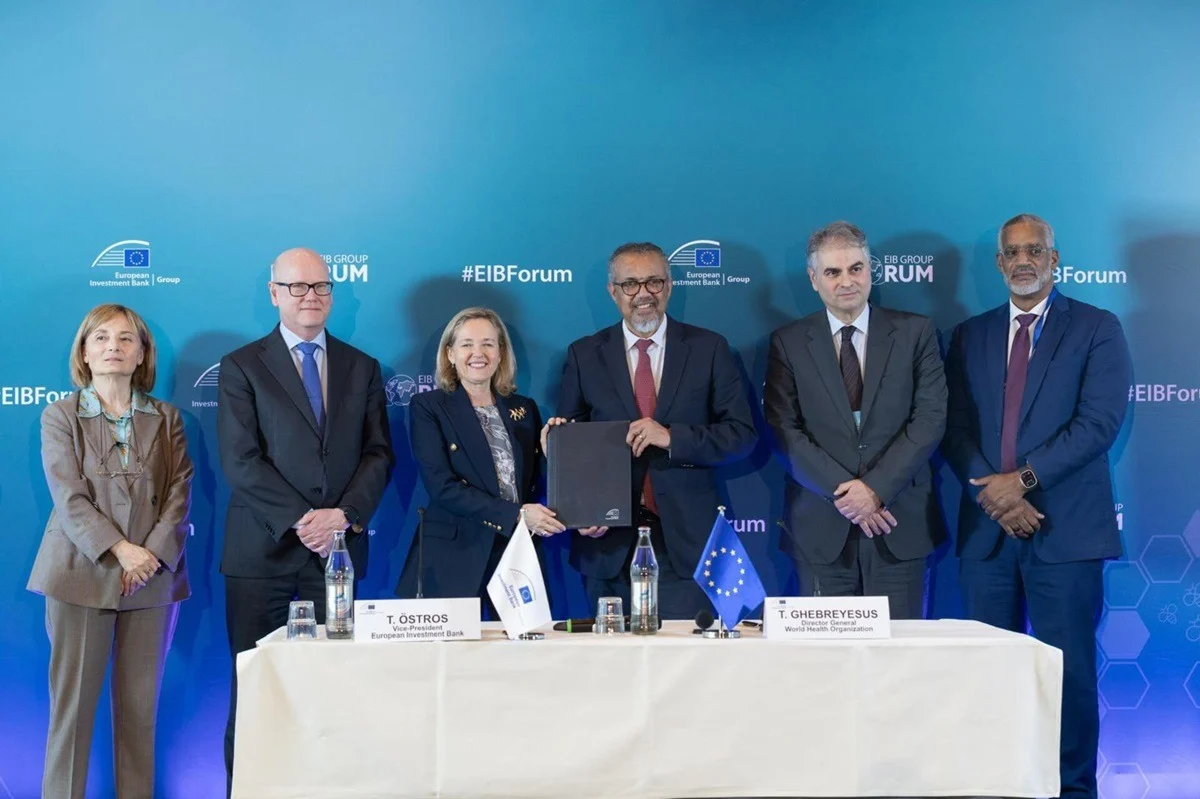
On March 6, 2025, a significant step was taken toward bolstering healthcare infrastructure and humanitarian response in the Middle East as Dr. Tedros Adhanom Ghebreyesus, Director-General of the World Health Organization (WHO), and Thomas Östros, Vice-President of the European Investment Bank (EIB Global), met at the prestigious EIB Group Forum held in Luxembourg. During this high-level gathering, the two leaders formally signed a landmark agreement securing a €10 million grant dedicated entirely to strengthening public health systems across Lebanon.
This crucial funding comes at a critical juncture for Lebanon, a nation that has faced prolonged economic turmoil, institutional challenges, and immense pressure on its domestic healthcare delivery systems. The newly minted partnership between the World Health Organization and the European Investment Bank’s specialized arm for international partnerships and development finance, EIB Global, is designed to address both immediate humanitarian needs and long-term systemic vulnerabilities within the Lebanese public health sector. By pooling resources, technical expertise, and international financial backing, the initiative aims to restore vital diagnostic capabilities and ensure uninterrupted medical care for some of the most vulnerable segments of the population.
At the core of the €10 million agreement is a dual-pronged strategy focused on rebuilding essential national health infrastructure and delivering targeted medical interventions. First and foremost, the initiative will fund the comprehensive re-establishment of Lebanon’s Central Public Health Laboratory. A functioning central laboratory is an absolute cornerstone of any robust public health system, serving as the ultimate authority for disease surveillance, epidemiological monitoring, food and water safety testing, and accurate clinical diagnostics. Years of compounding crises in Lebanon have severely degraded laboratory capacities, leaving the country exposed to potential outbreaks and limiting its ability to monitor public health threats effectively. By reconstructing and re-equipping this vital institution, the project will restore Lebanon’s national capacity to detect, analyze, and respond to health emergencies with precision and speed.
In tandem with rebuilding the Central Public Health Laboratory, the initiative places an immediate and urgent priority on the continuous provision of essential medications and comprehensive healthcare support. Chronic diseases represent a massive burden on healthcare systems globally, but in resource-constrained environments like Lebanon, patients suffering from long-term illnesses face life-threatening barriers to treatment. Under this new WHO and EIB Global framework, dedicated medical assistance and pharmaceutical supplies will be channeled directly to support more than 50,000 individuals suffering from severe chronic conditions.
This targeted assistance is specifically tailored to address the most prevalent and debilitating non-communicable diseases affecting the population, including diabetes, cardiovascular issues, and cancer. For patients battling these conditions, access to regular medication and specialized care is not merely a matter of improved quality of life; it is a matter of survival. The disruption of supply chains and the skyrocketing cost of pharmaceuticals in Lebanon have previously forced countless patients to ration their treatments or abandon them entirely. The €10 million injection aims to bridge this dangerous gap, ensuring that tens of thousands of vulnerable individuals receive the life-saving therapies they desperately require without catastrophic out-of-pocket expenses.
The signing ceremony in Luxembourg highlights the ongoing commitment of both the World Health Organization and the European Investment Bank to supporting populations caught in protracted crises. As global health challenges continue to intersect with economic fragility, strategic partnerships of this nature demonstrate how international financial institutions and specialized health agencies can coordinate to deliver tangible, life-saving impacts on the ground. Through this collaborative effort, the WHO and EIB Global are not only providing immediate relief to thousands of chronic disease patients in Lebanon but are also laying down the vital institutional building blocks necessary for a resilient, sustainable public health future.

Related Posts