World Health Organization (WHO) Director-General Dr. Tedros Adhanom Ghebreyesus has concluded the first day of his high-level, two-state visit to the Hashemite Kingdom of Jordan, a diplomatic mission designed to spotlight the enduring and robust partnership between the global health agency and the Jordanian government. The visit places special emphasis on critical health sectors, including universal health coverage (UHC), comprehensive mental health frameworks, and sustained humanitarian health actions in a region profoundly impacted by ongoing conflict and displacement.
The cornerstone of the opening day of the visit was a high-level official meeting with His Majesty King Abdullah II. This significant encounter underscored Jordan’s prominent role and visionary leadership in advancing health both as a vital national priority and a cornerstone of global stability. Discussions held between Dr. Tedros and King Abdullah II centered on critical pathways for strengthening resilient national health systems, expanding equitable access to essential medical care, and sustaining international and regional support for emergency responses. Particular attention was devoted to the urgent health needs of the Palestinian people, patients evacuated directly from Gaza to Jordan for specialized medical treatment, and the millions of refugees generously hosted by the kingdom.
"I wish to express my appreciation to His Majesty King Abdullah II for his commitment to advancing universal health coverage," stated Dr. Tedros during the discussions. "I also extend my thanks to His Majesty and the people of Jordan for their solidarity and generosity in providing health services to more than three million refugees, primarily from Gaza and Syria, who are living in the country."
Dr. Tedros further emphasized the kingdom’s broader humanitarian leadership, specifically highlighting His Majesty’s pioneering Medical Corridor initiative. This vital operational pathway delivers critical, life-saving care to ill and injured children evacuated from Gaza, demonstrating a steadfast commitment to putting health and humanity above all else during times of acute crisis.
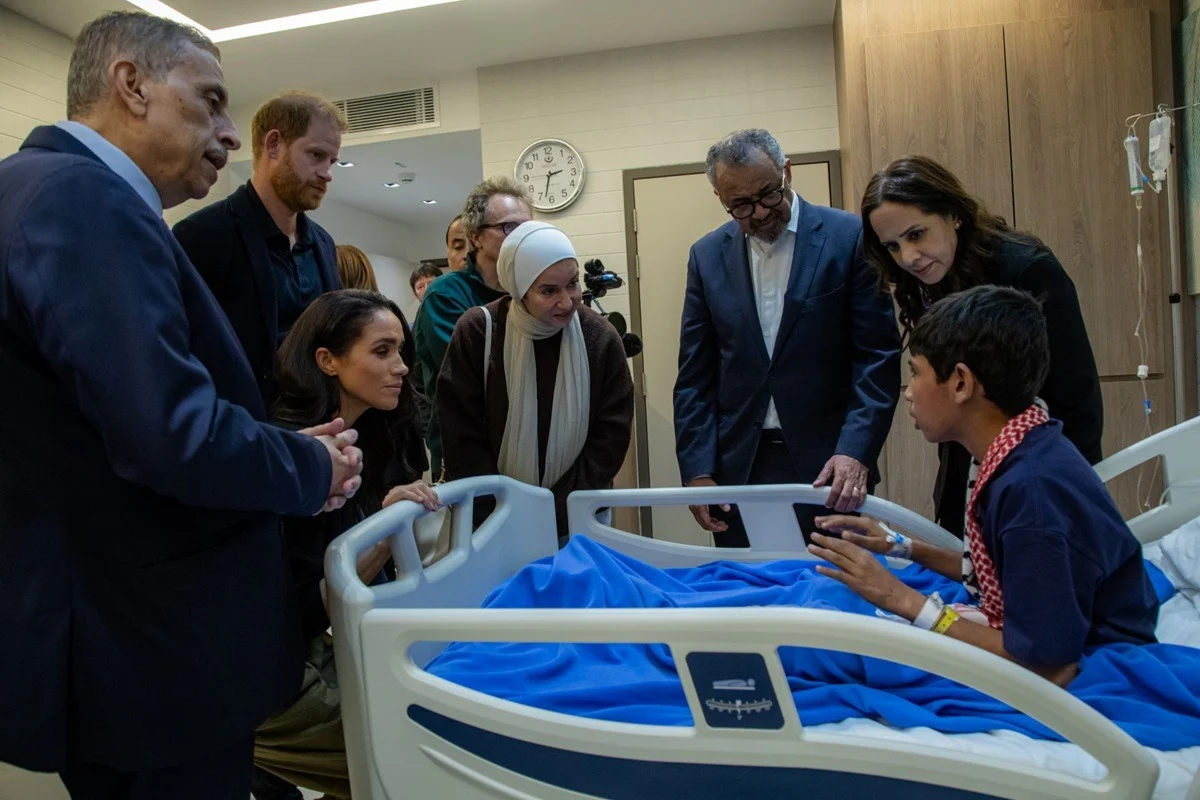
Following the royal audience, Dr. Tedros visited a specialized, WHO-supported hospital facility dedicated to providing advanced care to children evacuated from Gaza. During the hospital tour, the WHO Director-General met with young patients, their families, and the dedicated frontline health workers who are working tirelessly round-the-clock to deliver life-saving treatments for severe trauma, complex injuries, pediatric cancer, and other critical medical conditions. This emotional and impactful visit underscored the indispensable nature of the medical evacuation corridor operating through Jordan, while reinforcing the persistent need for robust, sustained international financial and logistical support to ensure that vulnerable children and other individuals in urgent need can reliably access essential, life-saving care.
Continuing a busy diplomatic and technical agenda, Dr. Tedros convened a high-level strategic meeting with key health partners, donor countries, United Nations agencies, and prominent philanthropic organizations. The convening focused heavily on aligning financing priorities aimed at strengthening Jordan’s domestic health infrastructure and bolstering ongoing humanitarian health operations. Key discussion points included scaling up specialized mental health services and reinforcing the capacities of countries that host large, vulnerable refugee populations. The Director-General expressed deep appreciation for the strong collaboration and steadfast commitment shown by international partners to invest in health initiatives across Jordan and the broader Eastern Mediterranean region.
In addition to multilateral engagements, Dr. Tedros held critical bilateral discussions with Jordan’s Minister of Health. These talks focused on concrete strategies for reinforcing the kingdom’s health system architecture and accelerating progress toward universal health coverage. Jordan has increasingly established itself as a global leader in strengthening a primary health care approach to achieve UHC, notably through the successful integration of mental health services into routine care settings, ensuring that patients can access psychological support seamlessly alongside physical treatments. The World Health Organization continues to provide vital technical support to this ongoing work through the Director-General’s Special Initiative for Mental Health.
Significantly, the Director-General was accompanied during several key engagements of the day by the Duke and Duchess of Sussex, Prince Harry and Meghan, participating in their capacities as founders of Archewell Philanthropies and long-standing supporters of the WHO’s global public health agenda. Archewell Philanthropies has previously provided crucial backing to a wide range of WHO-led initiatives, spanning from ensuring equitable global access to COVID-19 vaccines to supporting complex medical evacuation procedures and comprehensive mental health support programmes in crisis zones. Prince Harry actively participated as a dedicated ally of the WHO’s ongoing work in mental health advocacy, using the platform to highlight the critical necessity of investing in psychological wellbeing across communities and emergency settings, with targeted attention directed toward men, young people, and children who bear the psychological scars of conflict.
Reflecting on the collaborative efforts, Dr. Tedros remarked, "I want to thank our partners, including Prince Harry, Duke of Sussex and Meghan, Duchess of Sussex, whose commitment to mental health and humanitarian action has helped bring visibility, resources and hope to some of the world’s most vulnerable communities. Their collaboration is helping to advance WHO’s mission to ensure health for all."
Adding his perspective on the mission, Prince Harry shared, "It is an honour to join the Director-General of the World Health Organization in Jordan, a country that is leading by example in compassion, resilience and innovation. Through our work with Archewell Philanthropies, my wife and I have seen first-hand the impact of WHO’s efforts to support mental health and deliver life-saving care in emergencies. We remain deeply committed to advancing awareness, reducing stigma and expanding access to mental health support for all those affected by conflict and crisis. Mental health is fundamental to recovery, dignity and long-term peace, and we are proud to stand with WHO and partners around the world to make it a global priority."
The extensive official State visit will continue into its second day, featuring a scheduled visit to Jordan’s National Center for Rehabilitation of Addicts, a facility supported extensively by WHO that delivers integrated medical, psychological, and social services to patients. Dr. Tedros is also slated to meet with influential community leaders and prominent women’s groups, including representatives from the Jordanian Hashemite Fund for Human Development, before touring the renowned King Hussein Cancer Center to discuss recent medical advancements in comprehensive cancer care and explore expanded avenues for regional medical collaboration.
The high-profile visit will ultimately conclude with further strategic engagements with international partners dedicated to bolstering humanitarian logistics and operations, further cementing Jordan’s pivotal and indispensable role as a regional hub for medical evacuation, rapid emergency response, and long-term health system resilience.
(Reporting by Paul Garwood and the WHO Media Team, World Health Organization)

Related Posts