In 1952, portrait artist Robert Thom put the finishing touches on a canvas depicting the French chemist Louis Pasteur and his wife, Marie. In the painting, Marie gazes through an open background door toward her husband, who faces the viewer while holding two experimental flasks to the light, inspecting them with deep sincerity. This artwork belonged to a prominent series titled Great Moments in Medicine, commissioned by the pharmaceutical giant Parke, Davis and Company between 1948 and 1964. Produced at the height of the Cold War, these works celebrated the perceived superiority of Western science and medicine while glorifying American enterprise as a primary harbinger of global innovation and progress.
In an accompanying book written by Parke-Davis pharmacist and amateur historian George A. Bender, Pasteur is portrayed as triumphant not only over scientific superstition, but also over microbial unruliness. The metaphors of struggle and control that define this narrative—describing how Pasteur "combats," "persists," and "triumphantly" overcomes—reflect an antagonistic relationship between humans and microbes that his work ushered in. That dynamic lasted for well over a century, and arguably continues to shape modern perspectives today.
Now, a sweeping new exploration in the Spring 2026 issue of Gastronomica (Volume 26, Number 1) dives straight into the fallout of this historical human-microbial antagonism. Alongside three standalone articles, the new issue features a dedicated special section comprising an introduction and five distinct articles centered entirely on microbes in food studies. Wrestling with the legacy left behind by Louis Pasteur, the contributors examine the "post-Pasteurian" moment that has gradually succeeded the era of strict microbial eradication.
Drawing heavily on anthropologist and science and technology studies (STS) scholar Heather Paxson’s influential account of American cheesemaking, the authors trace a significant paradigm shift: moving away from strict Pasteurian regimes of microbial control and toward a post-Pasteurian world where humans and microbes increasingly coexist in relationships of collaboration and mutual habitation. Yet, the authors avoid treating this shift as a simple, linear narrative of historical progress. Instead, they carefully tease out the complex, often messy dynamics that occur when Pasteurian and post-Pasteurian frameworks overlap and collide.
Pasteurian control has long allowed modern societies to give little conscious thought to the microbes inhabiting our daily lives. Yet, as Maya Hey and Sarah Elton point out in their introduction to the special section, microbes remain the invisible center of our food systems. They structure everything from food regulation and flavor profiles to the institutions, ideas, and practices surrounding what we eat. They organize power dynamics across both individual and societal spheres while remaining intimately entangled with the physical materiality of food and human bodies.
Engaging with central food studies concepts—including materiality, embodiment, Foucauldian biopolitics, and Paxson’s framework of microbiopolitics—and inspired by contemporary scientific insights into the human microbiome, the authors place microbes at the very center of their analyses. They invite researchers and readers alike to engage with microbes as a co-constitutive aspect of studying food. The articles bring together methodologies from anthropology, geography, science and technology studies, philosophy, rhetoric, and the environmental humanities, pairing experienced scholars with emerging voices and drawing perspectives from Czechia, Germany, South Africa, and the United States.
Control
The contributors to the special section critically evaluate both Pasteurian notions of control and post-Pasteurian symbiotic imaginaries. In her contribution, "The Cyborg Politics of Milk Microbiota: Biopolitics in the Technological Frame," Annie Sandrussi demonstrates how gendered conceptions of animal bodies, reproductive processes, and the fluid nature of milk continue to inform how microbiota are managed in modern dairy production. Depending on the specific product—ranging from raw fluid milk and traditional cheese to precision-fermented milk—different gendered assumptions dictate how a biopolitics of control and prevention manifests. Inspired by Donna Haraway’s concept of the cyborg, Sandrussi reveals how microbial management in the dairy industry relies on a deep-seated commitment to a biotechnology of prevention, which in turn depends upon the meticulous regulation of gendered bodies framed as both "natural" and "unruly."
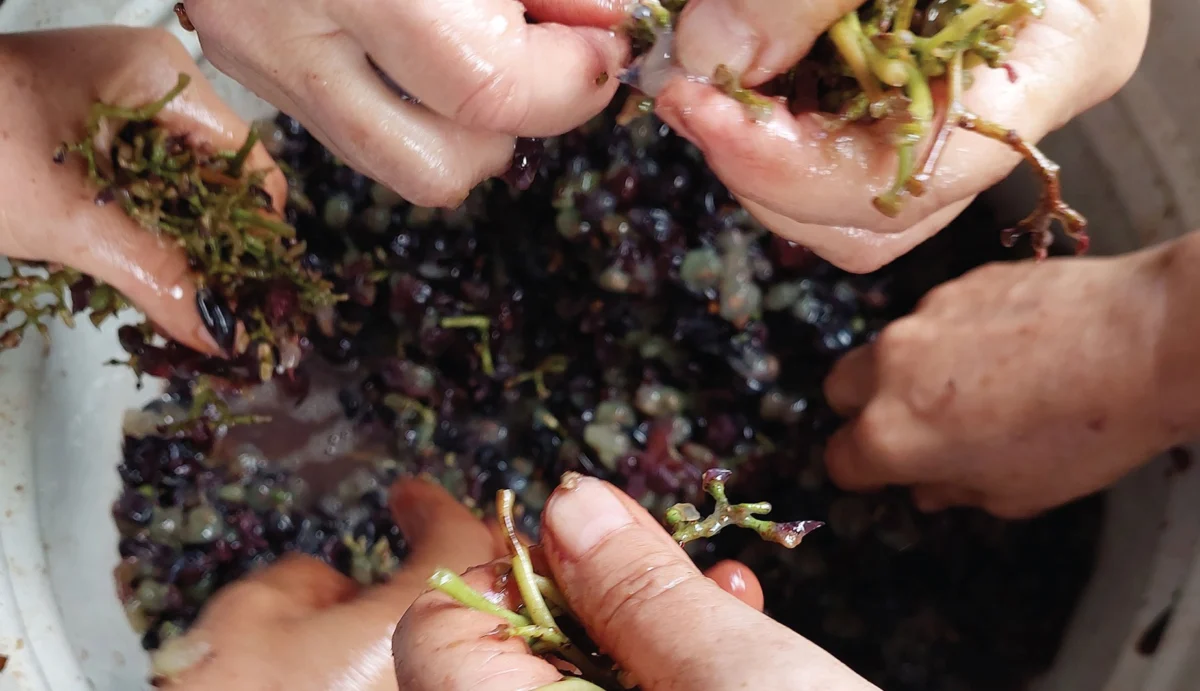
In contrast, the biodynamic wine producers studied by Nikolai Siimes, Nick Lewis, and Emma L. Sharp in "Probiotic Approaches to Agricultural Microbiomes: Collaborations in Biodynamic Wine Cultivation" adopt distinctly "probiotic" approaches to microbial life. Borrowing a term from environmental geographer Jamie Lorimer, these winemakers work alongside microbial life rather than fighting it, actively resisting the eradicatory ethics of violence common in conventional viticulture.
However, the authors find that this is not a monolithic practice defined solely by its opposition to conventional farming. Instead, it is a dynamic field with porous boundaries, where growers prize experimentation, maintain complex relationships with formal scientific knowledge, and place equal value on non-financial metrics. At the same time, the authors note that these multispecies relationships in biodynamic agriculture must still serve anthropocentric goals, requiring farmers to delicately balance ecological ideals with economic realities.
Microbes also occupy a central role in the novel vertical farming technologies analyzed by Lukáš Senft, Tereza Stöckelová, and Varvara Borisova in "The Microbiopolitics of Novel Foods: The Pro- and Antibiotic Implications of Cultivated Meat and Aquaponic Farming." While these high-tech indoor systems rely fundamentally on microbial collaboration, the human-microbial relationships within them remain strictly governed by a politics of containment. Vertical farmers control microbial life inside controlled indoor spaces by dampening certain human-microbial encounters while artificially amplifying others. These attempts at control frequently replicate the productivist logics of conventional agriculture in order to meet strict corporate sustainability and efficiency goals.
Connection and Disconnection
Whereas traditional Pasteurian regimes strive to establish a sanitary distance between microbes and humans, post-Pasteurianism opens the door to collaborative coexistence. The special section closely examines how these notions of connection and disconnection manifest in everyday microbial-human encounters.
In her study of homemade preserved foods carried by migrants moving between their old and new homes, Sevgi Mutlu Sirakova introduces the concept of "connected foods." This framework describes the relational processes that determine food quality through direct contact and familiarity with the people and production contexts of home. Her article, "Connected Food: Carrying Microbial Relations," explores how microbes travel alongside migrants, shaping new microbial landscapes and co-creating immigrant marketplaces abroad. Yet, even in these grassroots spaces, Pasteurian control measures continually threaten post-Pasteurian connectedness, particularly as tighter border controls increasingly restrict the movement of informal food items.
Connection also serves as a vital analytical tool in Overstreet’s microbial ethnography. She articulates the concept of "digestive belonging," which describes the processes through which human guts are biologically and immunologically remade by the microbes they encounter intimately in farm environments. These biological processes anchor humans to specific places while forging links among people and the animals in their care.
Conversely, in Sandrussi’s exploration of milk, the degree of physical disconnection from the feminized body directly dictates different modes of human-microbial relationships. Raw milk microbiota remain closest to the feminized bodies of cows and women, thus demanding higher levels of technoscientific intervention and control. Precision-fermented milk and plant-based milks, by contrast, sit furthest from associations with feminized bodies and require the least mediation, with traditional cheese occupying a middle ground. In milk production, Sandrussi suggests, the natural is consistently subordinated to the technological along gendered lines.
Terroir
The contributions in the special section also challenge traditional, static understandings of terroir. For Siimes, Lewis, and Sharp, centering microbes invites an expanded view of terroir that stretches far beyond simple soil composition and land topography to account for both human and non-human interventions. The realities of the Anthropocene, ongoing climate change, and agricultural adaptations like biodynamic viticulture demand a deeper attention to the messy, ambivalent entanglements binding human and microbial life together.
In her analysis of connected foods, Sirakova looks at traditional fermented beverages and foods as carriers of biocultural diversity. Their unique tastes are determined not just by localized environmental microbial activity, but by the microbial terroir of the human hands that craft and carry the food across international borders. Terroir thus transforms into a relational quality forged through human movement.
Overstreet’s notion of digestive belonging similarly extends terroir beyond the palate and straight into the human gut. For the farmers she interviewed, raw milk is a product not of regional climate patterns, but of the specific farm environment and the unique constellation of microbes, humans, and animals inhabiting it.
Meanwhile, the vertical farming technologies examined by Senft, Stöckelová, and Borisova actively reinforce disconnections between food-making and place-making. Freedom from the unpredictable variables of soil and seasons is what motivates approaches like aquaponics and cultivated meat production in the first place. Yet, the authors suggest that such disconnection is ultimately illusory; seasonal dynamics continue to influence microbial communities, and emerging human-microbial natures remain the inevitable byproduct of containment regimes.
Ultimately, the papers in this collection offer a rigorous critique of Pasteurian control while cautioning that human flourishing cannot rely on a post-Pasteurian understanding alone. Instead, the special section invites us to view our current era as a distinct microbial moment—one that punctures the history of our relationship with microbes not as a static series of triumphant milestones, but as an evolving, open-ended symbiosis essential for developing the adaptable responsiveness demanded by the Anthropocene.
Fear, Freedom, and Cake
In addition to its microbial focus, the new issue of Gastronomica features three standalone pieces that echo several of the collection’s core themes while introducing entirely new avenues of inquiry. The postwar anxieties that gave birth to the Great Moments in Medicine art series also fueled broader American nuclear fears during the Cold War. In "Sweet Ruin: Cakes and the Visual Culture of Anxiety, 1945–1960," Rebecca Burditt creatively reads these deep-seated fears through historical depictions of cake. She argues that cake uniquely encapsulates the contradictions of the atomic age, reflecting the intricate entanglement of geopolitics and domestic gender politics.
In particular, the rise of commercial cake mixes—with their promise of a quick, effortless fix to a traditionally arduous kitchen task—threatened to expose the fragility of postwar gender norms, much like nuclear weapons promised an easy military victory that masked America’s declining global reputation. Through meticulous close readings of visual art, historical accounts, and archival records, Burditt illustrates how cake imagery did not aim to realistically portray the nuclear age, but rather modeled how it felt to confront that era with an unflinching acceptance of the bomb’s sublime power.
While the Cold War redrew America’s political and gender landscapes, it simultaneously transformed the nation’s social and culinary connections to the wider world. Postwar America served as a vibrant hub of culinary experimentation, a phenomenon explored by Minh-Ha T. Pham in "A Story as Old as Cha Gio." While much of the existing literature in Vietnamese American food studies focuses heavily on refugees and the post-1975 era, Pham uncovers the overlooked stories of Vietnamese war brides, diplomats, housewives, students, and steamship workers who arrived in the United States between 1945 and 1975. She maps out networks of mutual aid and grassroots collaboration—ranging from airport arrivals to organized community gatherings—that supported these early immigrants and firmly embedded Vietnamese cooking into the American culinary landscape long before the country’s first commercial Vietnamese restaurant ever opened its doors.
The long-term legacy of this postwar culinary diversification was the expanding availability of diverse foods for those with the financial means to enjoy them. However, this newfound freedom of choice frequently brought new cultural imperatives to exert personal control and exercise dietary restraint. In "(Don’t) Let Them Eat Cake: The Illusion of Food Freedom," Phoebe Mitchem examines the concept of food freedom and its ambivalent implications for individuals who, like Mitchem herself, manage severe food allergies.
While contemporary diet literature frequently champions food freedom as an ideal goal—often framing it as a healthy antidote to an over-controlled approach to eating—Mitchem draws on her extensive experience with nutritional risk to explore the porous boundaries between disordered eating and rational, protective concerns over potentially harmful ingredients. For those who must remain vigilant about their food intake, food freedom can remain an unrealistic ideal. Instead, Mitchem proposes an alternative framework: "food fascination," defined as a balanced, curious interest in what we ingest and how it physically affects our bodies, proving that it is indeed possible to have our cake and eat it too.

Related Posts